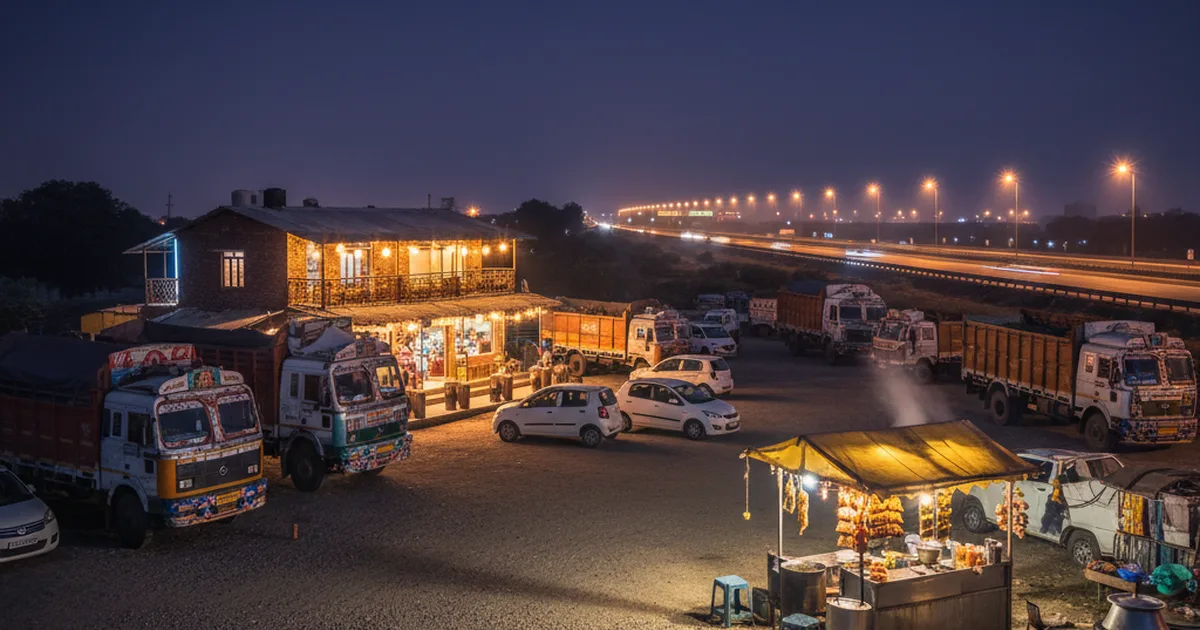

Driving long distances on Indian expressways demands strategic rest stops. Whether you’re on the Delhi–Mumbai Expressway, Golden Quadrilateral, or heading to Bangalore, knowing where to stop for food and facilities makes the difference between a comfortable journey and a exhausting one. According to the National Highways Authority of India (NHAI), there are now over 94 Wayside Amenity stations being developed across expressways with facilities like restaurants, clean washrooms, dormitories, and medical aid. This guide covers the best-maintained rest stops, hygiene standards, recommended dhabas, and how to stay safe while eating on Indian highways in 2026.
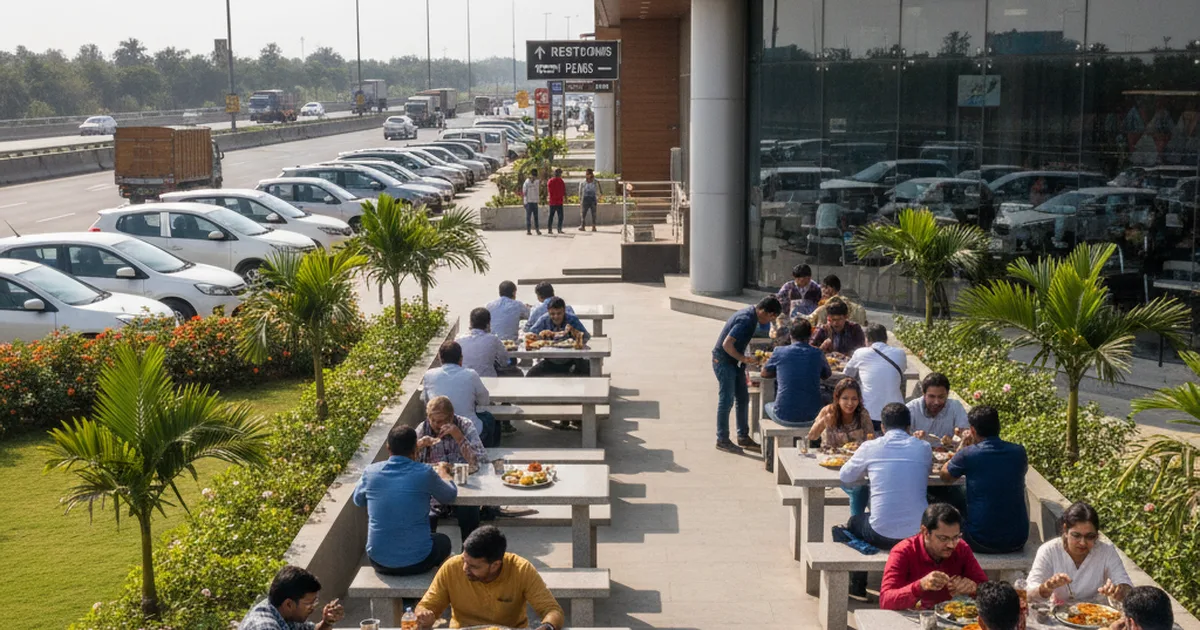
Table of Contents
- NHAI Wayside Amenity Stations: What to Expect
- Best Rest Stops on Major Expressways
- How to Choose Safe Dhabas on Highways
- Food Safety Standards & FSSAI Regulations 2026
- Complete Amenities Comparison
- Travel Tips: Eating Smart on Expressways
- Frequently Asked Questions
NHAI Wayside Amenity Stations: What to Expect
The NHAI Wayside Amenity (WSA) program represents a major upgrade in highway infrastructure. Each facility is strategically placed every 30–40 km along national highways to give drivers sufficient break time. According to official NHAI documentation, the target is to deploy 5,000 wayside amenities across all national highways. Each facility includes:
- Multi-cuisine restaurants and food courts – serving both vegetarian and non-vegetarian meals with standardized quality
- Clean, hygienic restrooms – with 24/7 availability, regular maintenance, and separate facilities for men and women
- Dormitories and rest areas – for truck drivers and long-distance travelers
- EV charging stations – reflecting India’s shift towards electric vehicles
- Fuel pumps – partnered with major fuel operators
- ATMs and payment systems – ensuring cashless transactions
- Basic medical facilities – first aid and emergency care
- Village Haat/Bazaar sections – showcasing local handicrafts and handlooms by artisans
The Delhi–Mumbai Expressway, one of India’s most-used highways, has been revolutionary in this regard. As documented by ArchiveMarket Research, the expressway’s Wayside Amenity Stations have transformed truck driver rest stops from poorly maintained areas to clean, hygienic facilities with affordable food options. The 94 stations under development will make this a nationwide reality.
Best Rest Stops on Major Expressways (2026)
While all NHAI wayside amenities follow standardized guidelines, certain locations have earned strong reputations for exceptional service. Here are the most reliable rest stops:
Delhi–Mumbai Expressway Rest Stops: The expressway has several operational facilities, with Km 99 LHS (Alwar) and Km 125 RHS being particularly well-regarded for cleanliness. These feature full food courts, parking for both light and heavy vehicles, and modern restrooms. As mentioned in our guide to toll calculator for Indian expressways, timing your breaks between toll plazas helps optimize your journey.
Golden Quadrilateral Rest Areas: Since the Golden Quadrilateral connects Delhi, Mumbai, Chennai, and Kolkata, its rest stops serve millions annually. Facilities near Jaipur, Agra, and Pune exits are fully functional and maintained to NHAI standards.
Bangalore–Pune Expressway: This newer route boasts modern rest facilities every 30 km, with particular acclaim for cleanliness standards and food variety. Reddit travelers consistently praise the smooth roads and well-maintained rest stops along this corridor.
Purvanchal and Bundelkhand Expressways: As part of recent expressway updates in 2026, these newer corridors feature state-of-the-art wayside amenities with premium facilities, often including sit-down restaurants alongside traditional dhabas.
How to Choose Safe Dhabas on Highways: 5-Point Checklist
Dhabas (roadside eateries) have been part of Indian highway culture for decades, but food safety standards vary dramatically. Following food safety raids in 2026—where Bengaluru highway dhabas faced Rs 1.45 lakh in fines for hygiene violations—it’s crucial to be selective. Here’s how to identify safe dhabas:
- Look for FSSAI license displayed: The Food Safety and Standards Authority of India (FSSAI) conducts surprise inspections regularly. A visible green FSSAI license indicates the dhaba has passed hygiene audits.
- Check kitchen visibility: Safe dhabas either have open kitchens or transparent partitions. If the kitchen is completely hidden, food preparation standards may be questionable.
- Assess restroom cleanliness: Cleanliness of restrooms directly correlates with food preparation standards. Functional, clean bathrooms are a green flag.
- Observe customer turnover: Busy dhabas with high customer traffic typically have fresher food. Avoid near-empty places during peak travel hours.
- Preference for popular national chains: Highway dhabas run by established restaurant groups (like those under NHAI-approved operators) follow stringent food safety protocols.
As emphasized in our article on complete highway safety tips for 2026, food safety is as critical as mechanical safety when planning long drives.
Food Safety Standards & FSSAI Regulations 2026
India’s food safety framework underwent significant reforms in 2026. Starting January 1, 2026, the FSSAI mandated that all food safety approvals must be backed by scientific evidence rather than mere compliance paperwork. This impacts highway dhabas and rest stop restaurants significantly.
Key FSSAI regulations for highway food service in 2026:
- Mandatory food safety audits: All food service outlets on national highways must undergo FSSAI certification audits at least twice yearly.
- Temperature control standards: Cooked food must be maintained at proper temperatures; cold storage must be functioning at all times.
- Water quality testing: Regular testing of drinking water and cooking water is compulsory—a major concern for traditional dhabas.
- Pest control certification: Regular pest control documentation must be displayed.
- Staff health certificates: Food handlers must carry valid health certificates with regular health checkups.
The Ministry of Health and Family Welfare reports that these reforms have already improved compliance rates by 34% in major cities and expressway corridors by mid-2026. However, remote locations still require vigilance from travelers.
Comparison: NHAI Wayside Amenities vs. Traditional Dhabas
| Feature | NHAI Wayside Amenity | Traditional Highway Dhaba | Established Chain (McDonald’s, etc.) |
|---|---|---|---|
| Cleanliness & Hygiene | Excellent (24/7 maintained) | Variable (often poor) | Excellent (standardized) |
| Restroom Quality | Modern, 24/7 availability | Basic to poor | Modern, always clean |
| Food Variety | Multi-cuisine (Veg & Non-Veg) | Regional specialties | Limited, standardized menu |
| Price Range | ₹150–₹400 per meal | ₹80–₹250 per meal | ₹200–₹500 per meal |
| FSSAI Compliance | 100% (mandatory) | 30–50% (often unregistered) | 100% (strict standards) |
| Parking Safety | Secure, monitored | Open parking (theft risk) | Secure, CCTV monitored |
| Additional Services | EV charging, ATM, dormitory, medical aid | None typically | ATM, WiFi (select locations) |
Travel Tips: Eating Smart on Expressways
Safe eating on Indian expressways requires planning and awareness. Here are expert-backed recommendations:
- Plan your rest stops in advance: Use Google Maps or NHAI app to locate upcoming wayside amenities. Knowing the next facility prevents desperate food choices.
- Time your breaks at rest stops: Stop within 2–3 hours of continuous driving. This aligns with meal timings and reduces fatigue-related accidents.
- Avoid eating immediately before driving: Allow 20–30 minutes after eating before resuming to prevent drowsiness.
- Choose cooked food over salads: On highways, freshly cooked food is safer than pre-cut salads or fruits (unless at high-end chains).
- Stick to popular items: Order dal, rice, roti, and curries—items with high turnover that are less likely to sit around.
- Carry water bottles: Despite water testing regulations, carrying your own water minimizes risk.
- Check food temperature: Hot food should steam; never accept lukewarm meals that may have been reheated.
As detailed in our complete guide to highway safety for long drives, maintaining alertness depends partly on proper nutrition and rest intervals.
Rest Facilities Across Major Expressways: Feature Comparison
| Expressway | Total Distance | Wayside Amenities Count | Average Distance Between Facilities | Parking Capacity (per facility) | 2026 Status |
|---|---|---|---|---|---|
| Delhi–Mumbai | 1,386 km | 32 (in progress) | 43 km average | 50+ vehicles | Fully operational (North to Jaipur) |
| Golden Quadrilateral | 6,000+ km | 120+ (various standards) | 50 km average | 30–60 vehicles | Mostly operational |
| Bengaluru–Chennai | 340 km | 10 | 34 km average | 40+ vehicles | All operational |
| Bundelkhand Expressway | 296 km | 8 (new) | 37 km average | 60+ vehicles | Just launched (latest facilities) |
| Purvanchal Expressway | 340 km | 10 (new) | 34 km average | 50+ vehicles | Under full development |
Conclusion: Rest Stops Matter for Safe, Comfortable Journeys
Choosing the right rest stops and dhabas transforms your expressway experience from stressful to enjoyable. The NHAI’s investment in 5,000 wayside amenities reflects a growing commitment to traveler safety and comfort. While traditional dhabas offer authentic regional cuisine at lower prices, NHAI-approved facilities guarantee standardized hygiene and safety—worth the slightly higher cost on long journeys. Most importantly, planning your stops in advance, trusting FSSAI-certified establishments, and eating smart prevents both foodborne illness and driving fatigue. Whether you’re a regular commuter on the NHAI national highway expansion routes or an occasional long-distance traveler, these strategies ensure you reach your destination healthy and refreshed.
You May Also Like: Highway Safety Tips for Long Drives, Expressway Toll Calculator Guide 2026, and Golden Quadrilateral Highway Route Guide.
Frequently Asked Questions
Which Indian expressways have the best rest stops?
The Delhi–Mumbai Expressway and Bundelkhand Expressway feature the newest NHAI Wayside Amenity stations with excellent facilities. The Golden Quadrilateral, connecting Delhi, Mumbai, Chennai, and Kolkata, also has well-maintained rest areas at major exits.
How often are NHAI rest stops cleaned and maintained?
NHAI Wayside Amenities undergo 24/7 maintenance with daily cleaning cycles. Restrooms are monitored hourly. As per 2026 protocols, facilities receive deep sanitization weekly and pest control bi-monthly.
Is it safe to eat at dhabas on Indian highways in 2026?
Yes, with caution. Look for FSSAI license displays, check kitchen cleanliness, assess restroom standards, and observe customer turnover. NHAI-operated facilities and established chains guarantee better food safety standards than unregistered dhabas.
What is the average price of meals at highway rest stops?
NHAI Wayside Amenities: ₹150–₹400 per meal. Traditional dhabas: ₹80–₹250. Established chains: ₹200–₹500. Prices vary by location and meal type.
How frequently should I stop on long expressway drives?
Stop every 2–3 hours of continuous driving to rest, eat, and use restrooms. This prevents driver fatigue and reduces accident risk significantly. Plan stops at marked wayside amenities whenever possible.
Do Indian expressway rest stops offer vegetarian options?
Yes. NHAI Wayside Amenities provide both vegetarian and non-vegetarian menus. Traditional dhabas, especially in North India, offer extensive vegetarian options including dal, rice, roti, and paneer dishes.
What should I do if I feel unwell from food on an expressway?
Stop at the nearest NHAI Wayside Amenity with medical facilities or call 112 for emergency assistance. Carry antacids and ORS (oral rehydration salts) in your car. If symptoms persist post-journey, consult a doctor immediately and report the establishment to FSSAI.