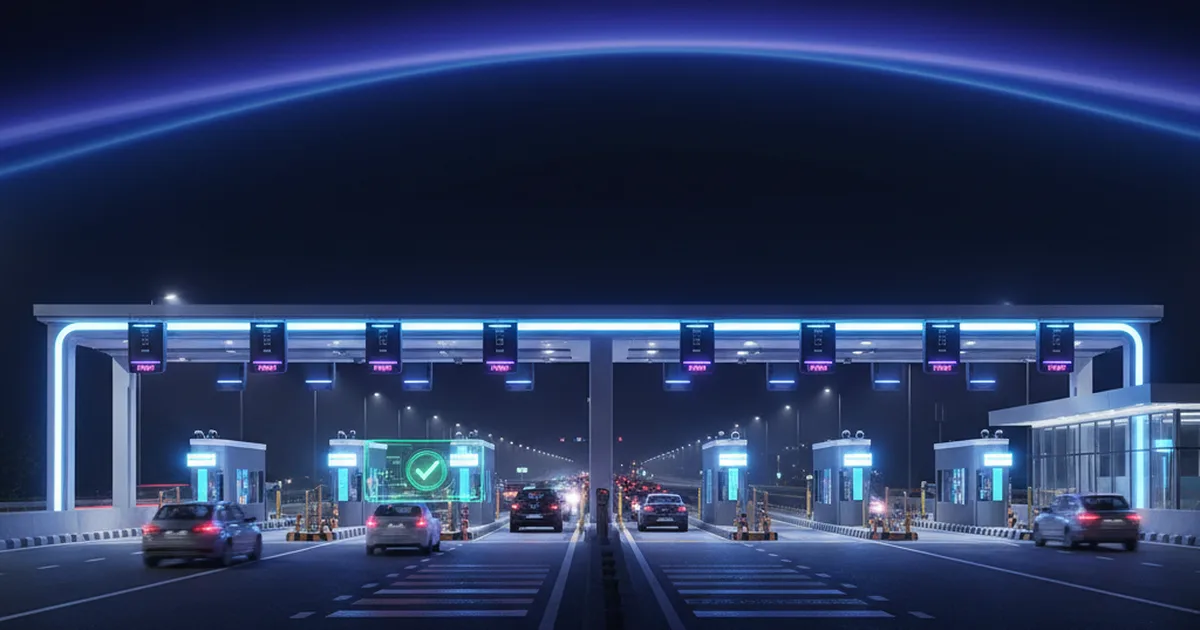

FASTag has revolutionized India’s toll collection system, with nearly 98% penetration across national highways and over 8 crore active users as reported by the Ministry of Road Transport and Highways. Electronic toll collection via FASTag streamlines highway passage, reducing transaction times from 2-5 minutes to just seconds. However, users frequently encounter recharge failures, balance depletion, and technical errors. This comprehensive guide covers everything you need to know about FASTag recharge methods, troubleshooting common issues, and optimizing your toll payment experience in 2026.

Table of Contents
- Understanding FASTag Basics and 2026 Updates
- 5 Simple Methods to Recharge Your FASTag
- New FASTag Annual Pass: ₹3,000 for 200 Toll Crossings
- Cash Payment Penalties and Barrier-Free Tolling
- Troubleshooting Common FASTag Errors and Failures
- How to Check Your FASTag Balance Instantly
- Security and Account Management Best Practices
- FASTag FAQs: Expert Tips and Solutions
Understanding FASTag Basics and 2026 Updates
FASTag, operated by NHAI (National Highways Authority of India) and participating banks, is a Radio-Frequency Identification (RFID) device enabling automatic toll deduction. The tag transmits account information to toll plaza scanners, eliminating manual payment and reducing congestion. FASTag comes in two variants: prepaid (where you maintain balance) and postpaid (where charges appear on your vehicle registration). The prepaid model dominates, with users loading wallet balance to cover tolls.
Major 2026 updates include MoRTH’s announcement of barrier-free tolling—replacing toll booths with AI-powered Automatic Number Plate Recognition (ANPR) and FASTag readers. From April 1, 2026, cash payments at toll plazas on national highways will be completely eliminated. This policy shift makes FASTag not optional but mandatory for highway passage. Additionally, the new FASTag Annual Pass scheme allows 200 toll crossings for ₹3,000 annually (approximately ₹15 per toll), creating a cost-effective option for regular commuters. As detailed in our toll calculator guide, understanding toll charges by vehicle category is crucial for budgeting.
The technology operates on ISO 18000-6C standards, with RFID tags functioning even at highway speeds (up to 120 km/h). Tags have a lifespan of 5+ years, with battery depletion being the primary limiting factor. Vehicle registration database integration ensures toll amounts are correctly deducted based on vehicle classification (cars, commercial vehicles, buses, two-wheelers).
5 Simple Methods to Recharge Your FASTag
Method 1: Mobile App (Paytm, Google Pay, PhonePe)
The fastest recharge method is through your FASTag provider’s mobile app or third-party payment apps. For Paytm FASTag holders: Open Paytm app → Navigate to “FASTag Recharge” → Select your issuing bank → Enter vehicle number or FASTag ID → Choose recharge amount (minimum ₹100) → Pay via UPI/wallet → Confirmation instant. Google Pay and PhonePe offer similar workflows under their “Bills and Recharges” sections. Recharge reflects in your account within 5 minutes.
Method 2: Bank Website/Portal
If your FASTag is issued by your bank (HDFC, ICICI, Axis, SBI, etc.), log into your bank’s website → Navigate to FASTag section → Select “Add Balance” → Enter amount → Authorize transaction → Confirmation email within 15 minutes. This method works even outside mobile networks, making it reliable during travel. Bank portals typically show transaction history, linked vehicles, and balance statements.
Method 3: Toll Plaza Top-Up (Emergency Option)
If your balance depletes and you lack recharge capability, many toll plazas offer immediate top-up facilities. Approach the toll counter, inform attendants of balance shortage, and they can add balance using their system connected to the bank network. This emergency facility prevents lane violations but may involve slight delays (3-5 minutes). Use this sparingly and maintain adequate balance to avoid such situations.
Method 4: NHAI Official Portal (nhai.gov.in)
NHAI’s official website includes a FASTag recharge option. Visit the portal → Enter your vehicle number and FASTag ID → Choose recharge amount → Pay via secure gateway → Confirmation within 30 minutes. This method works 24/7 and is particularly useful if you have issues with bank-specific portals.
Method 5: Authorized Retail Partners
Select retail partners (petrol pumps, auto shops) authorized as FASTag agents can process recharges. Provide your FASTag ID and desired amount—the agent processes the transaction via their system. This is convenient if you frequent specific petrol pumps on your regular routes. Commission availability ensures partner interest in providing this service.
| Method | Speed | Convenience | Minimum Amount | Best For |
| Mobile App | 5 minutes | Highest (24/7) | ₹100 | Regular recharge |
| Bank Portal | 15 minutes | High (24/7) | ₹500 | Large recharges |
| Toll Plaza Top-Up | 3-5 minutes | Emergency only | ₹100 | Balance depletion |
| NHAI Portal | 30 minutes | Medium (24/7) | ₹100 | Alternative option |
| Retail Partners | 5-10 minutes | Medium (business hours) | ₹500 | Routine stops |
New FASTag Annual Pass: ₹3,000 for 200 Toll Crossings
In 2026, MoRTH introduced an innovative FASTag Annual Pass priced at ₹3,000, allowing 200 toll plaza crossings annually—approximately ₹15 per crossing. This option benefits regular commuters driving on national highways daily or weekly. The annual pass eliminates balance management anxiety while providing substantial cost savings compared to standard per-toll rates (₹100-300 depending on category). Calculations: if you cross tolls 200 times annually (roughly 4 times weekly), you save approximately ₹15,000 compared to standard rates.
Eligibility includes private cars, jeeps, and vans. Commercial vehicles operate under separate tariff structures. The annual pass is valid for 365 days from issuance date, automatically expiring after 200 crossings or 12 months—whichever occurs first. You can purchase the pass through all standard recharge channels (mobile app, bank portal, NHAI website). As explained in our expressway updates for 2026, this new pricing accommodates the anticipated increase in toll plaza traffic from barrier-free tolling implementation.
The annual pass is particularly valuable for business professionals making regular highway trips, courier services, and frequent interstate travellers. Implementation involves minimal changes to existing systems—the pass functions identically to standard FASTag, with crossing counters tracked automatically. If the 200-crossing limit is reached before year-end, you can purchase another annual pass for continued coverage.
Cash Payment Penalties and Barrier-Free Tolling
MoRTH’s policy shift mandates FASTag or prepaid payment—cash acceptance ends on April 1, 2026. Drivers attempting cash payment after this date face penalties: double the standard toll amount. A typical ₹300 toll becomes ₹600 when paid in cash. This penalty structure strongly incentivizes FASTag adoption, transforming it from an optional convenience to a practical necessity.
Barrier-free tolling, operational at select plazas already, eliminates toll booths entirely. AI-powered cameras read vehicle number plates automatically, matching them against registered FASTag accounts and deducting tolls electronically. Vehicles proceed without stopping—average transaction time reduces from 30 seconds (with FASTag booth) to near-instantaneous (with barrier-free system). This technology enables highway speeds through toll zones, significantly improving traffic flow. During peak hours, barrier-free tolling reduces congestion by approximately 40% compared to traditional booths.
FASTag account data integrates with vehicle registration databases, enabling automatic toll deduction even if the driver is temporarily out of range. If balance is insufficient, the system flags the account, prompting urgent recharge through SMS/app notifications. These highway safety tips include maintaining adequate FASTag balance to avoid detection penalties and ensure smooth travel. The integration of barrier-free tolling with national highways represents a paradigm shift toward friction-free transportation infrastructure.
Troubleshooting Common FASTag Errors and Failures
Error Code 176: Tag Inactive/Not Detected
This is the most common error. If your tag is inactive when you pass a toll plaza, the system shows “Error 176” on the display board. You have 10 minutes to activate it (by visiting a toll counter with your vehicle documents) before the system classifies you as “cash payment,” charging double toll. Causes include: insufficient balance (activate balance first), tag battery depletion (tag expiration), or RFID reader malfunction. Solution: Ensure balance is always above ₹100 before highway travel. If the error persists, visit your issuing bank’s nearest branch for tag replacement or activation.
Recharge Failure: “Transaction Declined”
This occurs when your payment method fails. Causes: insufficient funds in your bank account, UPI/wallet limit exceeded, network timeout, or account freeze by the bank. Solutions: Verify sufficient balance in your linked account (minimum ₹100 more than recharge amount), check your daily UPI/card transaction limit, try recharging through an alternative method (if Paytm fails, try Google Pay), or contact your bank to confirm there are no transaction blocks on your account.
Balance Not Reflecting After Recharge
After paying, you expect balance to reflect immediately—but sometimes delays occur. Standard delay is 5-15 minutes for mobile app recharges, 30 minutes for bank portal, and up to 24 hours for manual toll plaza top-ups. If balance hasn’t reflected within these windows: Request a transaction receipt to confirm payment success, Check your bank account to confirm the deduction was processed, Contact your FASTag provider’s customer service with transaction ID. In rare cases, you may need to wait 48 hours and then contact the bank for balance correction.
Multiple Toll Deductions for Single Crossing
Occasionally, the system deducts toll twice for one crossing. This happens if you pass the scanner twice (due to alignment issues or system glitches) or if the scanner reads your tag twice. Solution: Request a toll receipt immediately from the plaza attendant, note the toll plaza name, time, and transaction ID, contact the issuing bank within 7 days with documentation for reversal. Banks typically refund erroneous deductions within 10-15 business days.
Tag Expiration and Replacement
FASTag batteries expire after 5+ years. As expiration approaches, you receive SMS/app alerts. Replacement is crucial—an expired tag won’t be detected, resulting in Error 176. Process: Contact your issuing bank, request FASTag renewal, collect the new tag (usually free), link it to your vehicle registration, and request balance transfer to the new tag. The entire process takes 3-5 business days. Plan replacements proactively to avoid emergency situations on highways.
| Error | Cause | Solution | Prevention |
| Error 176 | Inactive tag/No balance | Activate tag, add balance | Maintain ₹100+ balance |
| Recharge declined | Insufficient funds | Try alternate payment method | Check account balance first |
| Balance delay | Processing time | Wait 30 minutes, contact bank | Recharge 1 hour before travel |
| Double deduction | System glitch | Request receipt, file claim | Monitor balance regularly |
| Tag expired | Battery life end | Request renewal from bank | Plan renewal at year 4 |
How to Check Your FASTag Balance Instantly
Via Mobile App (Fastest – 10 seconds)
Open Paytm, Google Pay, or PhonePe → Tap “FASTag” or “Bills & Recharges” → Select your issuing bank → Your current balance displays instantly. Most apps also show transaction history, last 5 toll deductions, and tag expiry date. Set up balance alert notifications (when balance drops below ₹500) to avoid depletion surprises.
Via Bank Mobile App
Log into your bank’s mobile app → Navigate to “FASTag Account” or “Vehicle Services” → Your linked vehicle’s FASTag balance and transaction history appear. Bank apps typically offer more detailed statements, linking multiple vehicles if you have multiple tags.
Via Bank Website
Desktop access through your bank’s website provides comprehensive account management. Log in → Find “FASTag” section → View balance, transaction history, linked vehicles, and recharge options. This is ideal for detailed reviews or issues requiring documentation.
Via SMS (No App Required)
Send an SMS to your issuing bank’s FASTag number (typically found on your tag or bank statements) with format “BAL [FASTag ID]” → Receive balance via SMS within 2 minutes. Useful for those without smartphone app access or in low network areas.
At Toll Plaza Counter
Approach any toll plaza booth attendant, provide your FASTag ID or vehicle number → They access the system and provide your balance. Useful if you’re already at a toll plaza and want to verify balance before passage. Some plazas can top up immediately if needed.
Security and Account Management Best Practices
FASTag accounts link directly to your bank account and vehicle registration, making security paramount. Keep your FASTag ID and linked bank account details confidential—never share these with unknown persons. Banks will never request this information via phone or email. Be cautious of phishing links offering “FASTag recharge shortcuts” or claiming balance recovery—these are fraudulent schemes designed to steal credentials.
Maintain strong passwords for all FASTag provider accounts and linked bank apps. Enable two-factor authentication (OTP) wherever available. Monitor your toll transaction history monthly—report unauthorized deductions within 24 hours to your issuing bank for rapid fraud reversal. Link multiple payment methods (UPI, debit card, wallet) to your FASTag account to ensure recharge flexibility during payment method issues.
If your physical FASTag tag is damaged, stolen, or lost, contact your bank immediately for replacement. A stolen tag in wrong hands can deplete your balance rapidly. Banks freeze accounts upon theft reports, preventing unauthorized usage. Update your registered mobile number and email address if you change contacts—this ensures you receive critical notifications about balance depletion, tag expiry, or suspicious activity. These transportation safety measures extend to digital security for toll payment systems.
Conclusion
FASTag has evolved from a convenience to an essential infrastructure component in India’s toll collection ecosystem. With the mandate ending cash payments in April 2026 and the introduction of barrier-free tolling, FASTag functionality becomes unavoidable for highway users. This comprehensive guide covers recharge methods (5 convenient options), new annual pass benefits (₹3,000 for 200 crossings), troubleshooting solutions (addressing 5 common errors), and best practices ensuring smooth toll plaza passage. Regular balance checks, timely recharges, and proactive security management prevent complications. The new FASTag Annual Pass scheme optimizes costs for frequent commuters, while barrier-free tolling promises seamless highway experiences. As India’s transportation infrastructure modernizes, FASTag mastery becomes essential knowledge for every highway traveller.
You May Also Like: Toll Calculator Guide for Indian Expressways, Highway Safety Tips for Long Drives, and Best Rest Stops and Dhabas on Expressways.
Frequently Asked Questions
Can I recharge my FASTag offline?
No, FASTag recharge requires active internet connectivity through apps, bank portals, or NHAI website. However, you can recharge at toll plaza counters, which requires only presenting your tag and vehicle documents—no internet needed.
What is the maximum FASTag balance I can maintain?
Most banks allow maximum balances of ₹50,000-₹1,00,000, depending on the issuing bank’s policy. There’s no benefit to maintaining extremely high balances as toll deductions are automatic and immediate.
Can I transfer my FASTag to another vehicle?
Yes, but it requires updating your vehicle registration with the issuing bank. The tag remains linked to the primary registration, and toll charges are deducted based on the vehicle class registered. The transfer process takes 3-5 business days.
What happens if I run out of FASTag balance at a toll plaza?
You have 10 minutes to activate balance at the toll counter. The system shows “Error 176.” If not resolved within 10 minutes, you’re charged double toll (cash payment rate). Visit the counter attendant immediately upon this error.
Is the new FASTag Annual Pass available for all vehicles?
The Annual Pass is available for private cars, jeeps, and vans. Commercial vehicles, buses, two-wheelers, and bicycles operate under separate tariff structures and are not eligible for the annual pass.
How long does FASTag replacement take?
FASTag replacement typically takes 3-5 business days from request to collection. Request replacement immediately upon receiving expiry notification to avoid emergency situations. New tags are usually provided free of charge.
What happens after April 1, 2026, if I don’t have FASTag?
After April 1, 2026, cash payments are eliminated at national highway toll plazas. Vehicles without FASTag won’t pass—you must install FASTag beforehand. The government is ensuring widespread awareness and time for compliance before this mandatory date.