
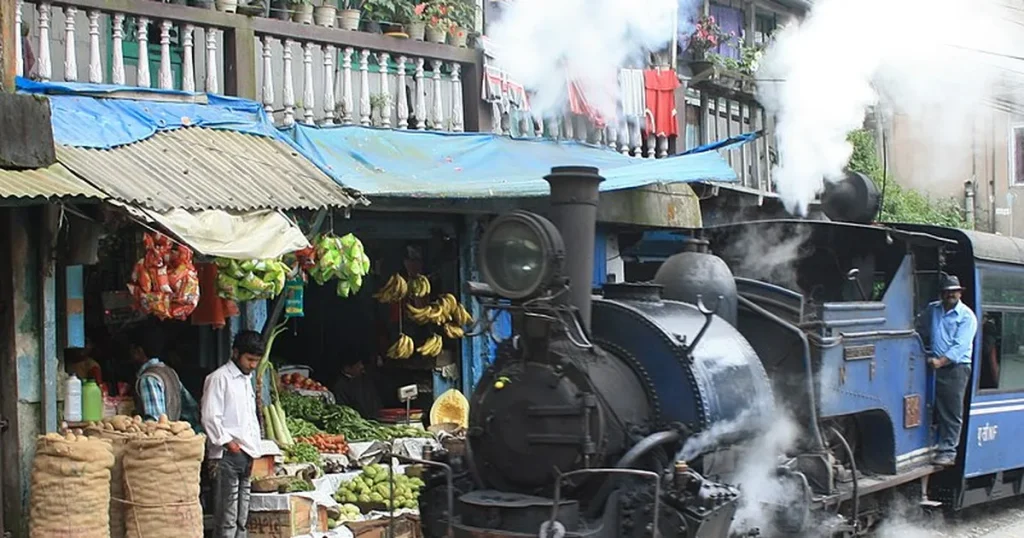
The New Jalpaiguri to Darjeeling train route is more than just a means of transport — it is a journey into the very heart of the Himalayas. This narrow-gauge railway line, famously known as the Darjeeling Himalayan Railway (DHR) or affectionately called the “toy train,” holds the distinguished status of a UNESCO World Heritage Site and consistently ranks among the most scenic train rides anywhere on earth.
From sweeping tea gardens to snow-capped Himalayan peaks, from colonial-era stations to a gravity-defying spiral loop, every kilometre of this route delivers something extraordinary. Whether you are a first-time traveller to India or a seasoned rail enthusiast, this guide covers everything you need to plan your journey with confidence.
Route Overview: NJP to Darjeeling at a Glance
Quick Facts
- Total Distance: ~88 km
- Estimated Journey Time: 7–8 hours
- Gauge: Narrow gauge (2 ft / 610 mm)
- Year Opened: 1881
- UNESCO Status: World Heritage Site (inscribed 1999) – “Mountain Railways of India”
- Starting Altitude (NJP): ~100 m above sea level
- Ending Altitude (Darjeeling): ~2,042 m above sea level
- Operated by: Northeast Frontier Railway (NFR), Indian Railways
The train departs from New Jalpaiguri (NJP), a major railway junction in West Bengal, and slowly climbs through the Himalayan foothills before arriving in Darjeeling, the “Queen of Hills.” Along the way, it passes through approximately 14 stations, including Siliguri, Sukna, Rongtong, Kurseong, and the iconic Ghum station — the highest railway station in India at 2,258 metres above sea level.
The contrast in altitude between the start and end points makes this one of the most dramatic ascents you can experience on a train anywhere in the world. The narrow 2-ft gauge track winds and zigzags through the mountains with an engineering elegance that has stood for over 140 years.
Scenic Highlights You Cannot Miss
What truly sets this route apart from any other railway journey is the sheer variety of landscapes and landmarks packed into a single ride. Here are the must-see highlights:
1. Darjeeling Tea Gardens
As the train climbs higher, the hillsides transform into a patchwork of vivid green tea bushes. Darjeeling tea is considered among the finest in the world, and watching the estates roll by from your carriage window is a sight that stays with you long after the journey ends.
2. Batasia Loop
The Batasia Loop is arguably the most photographed feature of the entire route. Built to manage the sharp gradient near Darjeeling, this spiral loop allows the train to gain altitude without using a steep incline. The loop is surrounded by a beautifully maintained garden and a war memorial honouring Gorkha soldiers. On a clear day, the views of Kanchenjunga — the world’s third-highest peak — are absolutely breathtaking.
3. Ghum Station – India’s Highest Railway Station
Situated at 2,258 metres, Ghum (Ghoom) station is a landmark in Indian railway history. The small but charming station also houses the Ghoom Monastery nearby, making it worth a short stop if your schedule allows.
4. Himalayan Vistas and Forest Stretches
As you gain altitude, rhododendron forests, silver oak groves, and pine trees line the tracks. On clear mornings, the snow-capped ranges of the Eastern Himalayas frame the horizon in a way that no photograph truly captures.
5. Loop and Zigzag Sections
The line uses a combination of loops and zigzags to manage the steep terrain — a brilliant feat of 19th-century civil engineering. These sections slow the train right down, giving passengers plenty of time to soak in the views from the open windows.
Available Trains on the NJP–Darjeeling Route
There are a few different options for travelling this route depending on your schedule, budget, and how much of the experience you want to savour:
| Train / Service | Departure | Arrival | Travel Time | Class |
|---|---|---|---|---|
| NJP–Darjeeling Passenger (Diesel) | ~09:00 (NJP) | ~16:15 (Darjeeling) | ~7 hr 15 min | First Class |
| Joy Ride (Steam / Diesel) | Darjeeling (Round Trip) | Darjeeling | ~2 hours | First Class |
💡 Pro Tip: Timings can change seasonally. Always verify the latest schedule on the official IRCTC website or at the New Jalpaiguri station booking counter before your trip.
If you are short on time, the Joy Ride is an excellent alternative. Departing from Darjeeling itself, it covers the Batasia Loop and Ghum station in about two hours and offers most of the visual highlights of the full journey in a condensed format. It is a popular choice for day visitors coming up by road from Siliguri or NJP.
How to Book Your Ticket
Booking in advance is strongly recommended, especially during peak travel seasons when seats fill up weeks ahead of time. Here is how to secure your spot:
- Online: Book through the IRCTC website or app. Search for the train number/name and select First Class (the only class available on DHR).
- At the Station: Tickets can be purchased at the NJP or Darjeeling booking counters. Arrive early on the day of travel if booking in person.
- Advance Booking Window: Typically opens 120 days before the journey date for most trains.
- Group Travel: For groups of six or more, consider contacting the station master’s office for special arrangements.
Understanding how the PNR status system works can help you keep track of your reservation and waitlist position after booking — especially useful if you are booking during peak season when confirmed seats are limited.
Best Time to Travel from NJP to Darjeeling by Train
The Darjeeling region is beautiful year-round, but each season brings a different character to the journey:
- Spring (March–May): Clear, bright skies and rhododendrons in full bloom. Excellent visibility of Kanchenjunga. Ideal for photography.
- Summer (June–August / Monsoon): Lush green landscapes, but heavy rainfall can cause landslides and occasional service disruptions. Not recommended for first-time visitors.
- Autumn (September–November): Arguably the best season. Post-monsoon clarity brings some of the sharpest views of the Himalayas. Pleasant temperatures and fewer crowds than spring.
- Winter (December–February): Cold and misty, but magical when the slopes are dusted with snow. Mornings can be very cold, so pack layers. The steam Joy Ride feels especially atmospheric in winter fog.
Key Stations Along the Route
The NJP to Darjeeling line passes through a series of fascinating stations, each with its own character. Here are the main stops to know:
- New Jalpaiguri (NJP): The starting point and a major broad-gauge junction connecting to the rest of India.
- Siliguri Junction: A busy commercial city at the foothills, serving as the gateway to the northeast.
- Sukna: Where the real climb begins — the track starts to ascend sharply from here.
- Rongtong: A quiet intermediate station surrounded by forest and tea estates.
- Tindharia: Home to the DHR’s locomotive maintenance workshop, dating back to the colonial era.
- Mahanadi: Known for its photogenic bridge and river crossings.
- Kurseong: A charming hill town at around 1,458 m, famous for its tea gardens and colonial bungalows. Worth a stop on its own.
- Tung: A small station with sweeping valley views.
- Ghum (Ghoom): India’s highest railway station at 2,258 m. A must-stop.
- Darjeeling: The final destination — the iconic hill station at 2,042 m.
Why the Darjeeling Himalayan Railway Is World-Famous
Built between 1879 and 1881 under the direction of Franklin Prestage of the Eastern Bengal Railway, the Darjeeling Himalayan Railway was a groundbreaking achievement. At a time when construction equipment was primitive and the Himalayan terrain was unforgiving, the engineers managed to lay a 2-ft gauge track that climbed over 2,000 metres across just 88 km.
The railway’s UNESCO World Heritage status, awarded in 1999, recognised it as “an outstanding example of bold, ingenious civil engineering solutions to the problem of establishing a rail link through a difficult, mountainous terrain.” It stands alongside the Kalka to Shimla Railway and the Nilgiri Mountain Railway as one of three UNESCO-listed mountain railways in India.
More than 140 years after it was built, the DHR continues to run — carrying tourists, locals, and history in equal measure. Unlike modern high-speed travel, this train invites you to slow down and truly experience the landscape. It is, without question, one of the great railway journeys of the world.
Things to Do in Darjeeling After Your Train Journey
Once you arrive in Darjeeling, the exploration is far from over. The town and its surroundings are packed with attractions:
- Tiger Hill Sunrise: Wake up early and head to Tiger Hill for a breathtaking sunrise view over Kanchenjunga. One of the most iconic sunrise spots in the world.
- Himalayan Mountaineering Institute (HMI): A legendary institution co-founded by Tenzing Norgay, the first man to summit Everest. The museum is fascinating.
- Padmaja Naidu Himalayan Zoological Park: Home to snow leopards, red pandas, and Himalayan wolves.
- Darjeeling Ropeway: A cable car that offers sweeping valley views — though it operates on limited schedules.
- Tea Garden Tours: Visit estates like Happy Valley Tea Estate to see how Darjeeling’s famous tea is grown and processed.
- Peace Pagoda: A serene Japanese Buddhist pagoda with panoramic Himalayan views.
- Darjeeling Market (Chowk Bazaar): Pick up Darjeeling tea, woollen handicrafts, and local snacks.
How This Route Compares to Other Mountain Railways in India
India is fortunate to have several remarkable mountain railway routes, but the NJP–Darjeeling line holds a special place among them. Here is a quick comparison with two other iconic mountain railways you might consider:
| Route | Distance | Altitude Gain | UNESCO Status | Journey Time |
|---|---|---|---|---|
| NJP → Darjeeling (DHR) | ~88 km | ~1,940 m | ✅ Yes (1999) | ~7–8 hrs |
| Kalka → Shimla | ~96 km | ~1,445 m | ✅ Yes (2008) | ~5–6 hrs |
| Mettupalayam → Ooty (NMR) | ~46 km | ~2,203 m | ✅ Yes (2005) | ~4–5 hrs |
Each of these journeys is extraordinary in its own right. If mountain railways fascinate you, all three are well worth experiencing on separate trips. The DHR, however, stands out for the sheer drama of its Himalayan setting and the rich colonial heritage of the route.
Practical Travel Tips Before You Board
- Arrive Early: Reach NJP station at least 45 minutes before departure. The train can fill up quickly, and early arrivals get the best window seats.
- Best Seat: The right side of the train when going uphill (NJP to Darjeeling) generally offers superior valley views.
- Carry Snacks: On-board food options are minimal. Bring water, snacks, and a light meal for the 7–8 hour journey.
- Dress in Layers: The temperature drops significantly as you climb. Even in summer, Darjeeling can be cool. Pack a light jacket or fleece.
- Camera Ready: Keep your camera or phone accessible at all times — the views change constantly and you won’t want to miss a moment.
- Motion Sickness: The winding track can cause motion discomfort for some travellers. Carry appropriate medication if you are prone to this.
- Monsoon Caution: During June–August, landslides occasionally disrupt service. Check for updates before travelling during this period.
🚂 Insider Tip: If you are travelling for the first time and want the full heritage steam experience, combine the diesel passenger train from NJP with the steam Joy Ride from Darjeeling the following morning. It gives you the complete DHR experience across two days.
Explore More Railway Journeys Across India
If this route has ignited your love for Indian Railways, there is an entire country of spectacular rail journeys waiting to be discovered. From coastal routes to cross-country expresses, our Railways section is packed with in-depth guides to help you plan every trip.
You might also enjoy reading about the Howrah to Chennai train route, which covers over 1,650 km of diverse Indian landscape from the east coast to the south, or the New Delhi to Mumbai corridor — one of the busiest and most important rail lines in the country.
For scenic routes in other parts of India, the Koraput to Rayagada train route through Odisha’s tribal heartland and the Ratnagiri to Mangalore Konkan Railway are both outstanding choices for anyone who travels by train for the joy of the journey itself.
Looking for more travel inspiration across India’s roads and railways?Explore All Guides on Road Rail Infra →
Frequently Asked Questions (FAQs)
How long does the New Jalpaiguri to Darjeeling train journey take?
The full journey takes approximately 7 to 8 hours, covering around 88 km of narrow-gauge track through the Himalayan foothills. The slow pace is part of the charm — it gives passengers ample time to absorb the scenery.
How do I book tickets for the Darjeeling Himalayan Railway?
Tickets can be booked online through the IRCTC website or app, or in person at the booking counters at New Jalpaiguri and Darjeeling stations. Advance booking of at least 30 days is recommended during peak tourist seasons (spring and autumn).
Is the Darjeeling toy train steam-powered?
The main NJP to Darjeeling passenger service uses diesel engines. However, vintage steam locomotives are still used for the popular Joy Ride from Darjeeling town, which covers the Batasia Loop and Ghum station in a two-hour round trip.
What is the best time of year to travel on this route?
Spring (March–May) and Autumn (September–November) are the best seasons. Spring offers blooming flowers and clear skies, while autumn brings the sharpest mountain views after the monsoon rains clear the air. Avoid the monsoon (June–August) if possible due to the risk of landslides.
Can I do a round trip on the toy train in one day?
A full round trip from NJP in a single day is not practical given the 7–8 hour one-way travel time. However, the 2-hour Joy Ride from Darjeeling is a great option if you are short on time — it covers the Batasia Loop and Ghum station in a comfortable round trip from town.
Which is the highest railway station on this route?
Ghum (Ghoom) station, at an altitude of 2,258 metres above sea level, is the highest railway station in India and one of the key highlights of the NJP–Darjeeling journey.
Is the NJP to Darjeeling train safe for families and children?
Yes, the journey is safe and particularly enjoyable for children. The slow pace, open mountain views, and vintage character make it a wonderful family experience. It is advisable to carry snacks and water as on-board food options are limited.
What is the Batasia Loop?
The Batasia Loop is a spiral railway loop near Darjeeling built to help the train manage the steep gradient without a sharp incline. The surrounding area features a beautifully maintained garden and a Gorkha war memorial. On clear days, the views of Kanchenjunga from here are spectacular.
Is the Darjeeling Himalayan Railway a UNESCO World Heritage Site?
Yes. The DHR was inscribed as a UNESCO World Heritage Site in 1999 under the category “Mountain Railways of India,” recognising it as an outstanding example of bold railway engineering in challenging mountain terrain.
Which side of the train offers the best views from NJP to Darjeeling?
The right side of the train when travelling uphill from NJP to Darjeeling generally offers better views of the valleys and the Himalayan foothills. Arrive early to secure a good window seat before the carriage fills up.
How many stations are there between NJP and Darjeeling?
There are approximately 14 stations along the full route, including Siliguri, Sukna, Rongtong, Tindharia, Kurseong, Tung, Ghum, and Darjeeling. Each station has its own character and charm.
Image Credits: Wikipedia | Content last reviewed: 2025. Train timings are subject to change — always verify with IRCTC before booking.