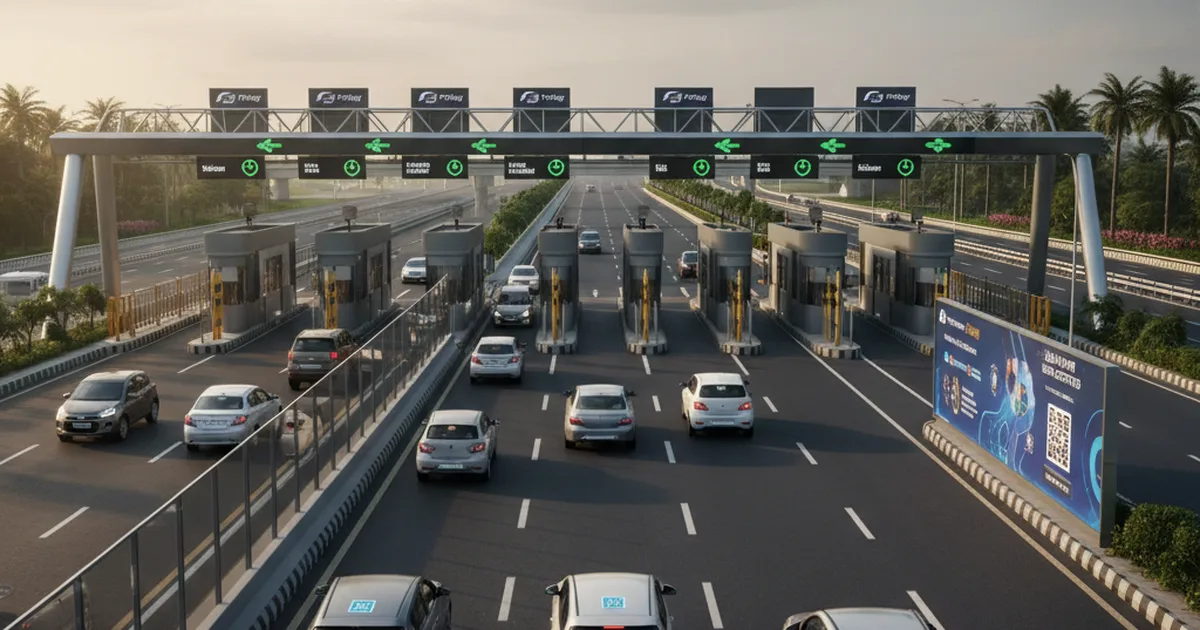

FASTag has revolutionized toll payment across India’s highways, making toll plazas faster and more efficient. From April 2026, the NHAI has moved toward a zero-cash policy, making FASTag or UPI mandatory at toll plazas. This comprehensive guide covers everything you need to know about FASTag recharge, usage, activation, troubleshooting, and the latest 2026 updates—so you can navigate India’s highways seamlessly without worrying about payment delays.
Table of Contents
- What is FASTag? How RFID Technology Works
- How to Get FASTag: Purchase and Activation Process
- How to Recharge FASTag: Step-by-Step Methods
- FASTag Annual Pass 2026: New Pricing and Benefits
- FASTag vs UPI: Understanding the Differences
- Common FASTag Issues and Troubleshooting
- FASTag Security, Privacy, and Best Practices
- Frequently Asked Questions
What is FASTag? How RFID Technology Works
FASTag is an electronic toll collection system launched by the National Payments Corporation of India (NPCI) in collaboration with the National Highways Authority of India (NHAI). It uses Radio Frequency Identification (RFID) technology to enable automatic, contactless toll payments at highway toll plazas across India.
The system works by embedding a microchip in a sticker that you affix to your vehicle’s windshield. When you approach a toll plaza, an RFID reader scans the tag and automatically deducts the toll amount from your linked bank account or prepaid wallet. There’s no need to stop at the booth or exchange cash—the entire transaction takes seconds.
Key Technical Details:
- Technology: Radio Frequency Identification (RFID), operating on the 5.8 GHz frequency band
- Range: RFID readers can scan FASTag from up to 5 metres away
- Operator: National Payments Corporation of India (NPCI)
- Issuing Banks: 36+ authorized banks including SBI, HDFC, ICICI, Axis, Yes Bank, and others
- Payment Method: Direct deduction from linked saving/current account, credit card, or prepaid wallet
- Compatibility: Works on 600+ toll plazas across NHAI-managed national highways
Real-Time Data (June 2026): According to NHAI, over 15 million vehicles in India now have active FASTag accounts, with monthly transaction volumes exceeding ₹2,000 crore. The adoption rate has increased 45% year-over-year as mandatory usage rules take effect.
How to Get FASTag: Purchase and Activation Process
Step 1: Choose an Authorized Bank
FASTag is issued by 36+ authorized banks. Popular options include:
- State Bank of India (SBI)
- HDFC Bank
- ICICI Bank
- Axis Bank
- Yes Bank
- IDBI Bank
- Kotak Mahindra Bank
Step 2: Apply for FASTag
You can apply either online or at a toll plaza:
- Online: Visit the issuing bank’s website, fill in vehicle and bank details, upload RC and ID proof, and pay the FASTag fee (₹100–₹500 depending on bank)
- At Toll Plaza: Authorized FASTag shops operate at major toll plazas where you can apply and receive the tag on the spot
- Mobile Apps: Apps like Paytm, Google Pay, and bank apps allow direct FASTag application
Step 3: Link Your Bank Account
Provide your bank account or wallet details for automatic deduction of toll charges. You can also use pre-loaded wallets or credit card linked accounts.
Step 4: Activate Your FASTag
Once you receive the physical RFID sticker, paste it on the inside of your windshield (usually on the top-right corner). Register the tag with your vehicle’s registration number via the bank’s portal or app to activate it fully. Most banks activate FASTag within 24–48 hours of registration.
Cost (2026): FASTag purchase cost ranges from ₹100–₹500 across banks, with additional refundable security deposits depending on the bank. After April 1, 2026, the FASTag Annual Pass costs ₹3,075 (revised from ₹3,000).
How to Recharge FASTag: Step-by-Step Methods
Your FASTag account can be set up in two ways: automatic deduction from your bank account (pay-as-you-go) or prepaid wallet recharge. Here’s how to recharge:
Method 1: Online Recharge (Prepaid Wallet)
- Open the issuing bank’s mobile app or website
- Navigate to “FASTag Recharge” or “Toll Payment”
- Enter your vehicle registration number or FASTag ID
- Select the recharge amount (usually ₹500–₹10,000)
- Complete payment via UPI, credit/debit card, or net banking
- Amount is credited immediately to your FASTag wallet
Method 2: Google Pay or Paytm Recharge
- Open Google Pay or Paytm app
- Search for “FASTag” in Bills & Recharges section
- Enter your vehicle registration number
- Select the bank/wallet issuer
- Enter recharge amount and complete payment
- Credit to account within minutes
Method 3: Automatic Recharge (Auto-Debit)
Link your bank account to FASTag, and toll amounts are automatically deducted without manual recharging. This is the most convenient method for frequent highway users.
Method 4: POS Machine at Toll Plaza
You can recharge at the FASTag counter at any major toll plaza by handing over cash or card. The process takes 2–5 minutes.
Typical Recharge Times: Online recharges are credited within 15 minutes to 2 hours. During peak travel season, allow up to 4 hours.
FASTag Annual Pass 2026: New Pricing and Benefits
NHAI introduced the FASTag Annual Pass scheme for frequent highway travelers. As of April 1, 2026, the fee has been revised to ₹3,075 (previously ₹3,000).
Annual Pass Benefits:
- Unlimited toll trips on all NHAI-managed national highways for one financial year (April–March)
- No per-trip charges — pay once, travel unlimited
- Ideal for: Commercial vehicles, fleet operators, frequent business travelers, and logistics companies
- Validity: 365 days from the date of purchase
- How to Purchase: Apply via NHAI portal (nhai.gov.in), bank websites, or the Rajmargyatra mobile app
When to Use Annual Pass vs Regular FASTag:
| Usage Pattern | Annual Pass (₹3,075/year) | Regular FASTag (Pay-per-trip) |
|---|---|---|
| One trip per month | ❌ Not worth it | ✅ Better option |
| 2–3 trips per week | ✅ Highly recommended | ❌ Expensive |
| Daily highway usage | ✅ Essential investment | ❌ Not practical |
| Occasional long trips | ❌ Overkill | ✅ Suitable |
Quick Calculation: If your regular FASTag toll expenses average ₹300 per week, an annual pass saves you approximately ₹12,600 per year (₹15,600 toll cost vs ₹3,075 annual pass).
FASTag vs UPI: Understanding the Differences
From April 1, 2026, NHAI enforced a zero-cash policy on national highways. This means toll payments are now limited to FASTag and UPI only. Here’s how they compare:
| Feature | FASTag (RFID) | UPI (Digital Wallet) |
|---|---|---|
| Technology | Radio Frequency Identification (RFID) | Unified Payments Interface (UPI) |
| Setup Time | 24–48 hours after registration | Instant (if UPI app already linked) |
| Physical Device | Windshield sticker required | Smartphone only |
| Processing Speed | 2–3 seconds at toll booth | 10–15 seconds (manual entry at booth) |
| Cost | ₹100–₹500 (one-time) | Free if already installed on phone |
| Surcharge | Standard toll rate | 25% surcharge for non-FASTag users (as per NHAI rule) |
| Best For | Frequent highway users, commercial vehicles | Occasional travelers, emergency situations |
| Toll Passes | Annual pass (₹3,075) available | No annual pass option; pay-per-trip only |
Important Note (June 2026): NHAI charges 25% extra toll fee for vehicles paying via UPI (as non-FASTag users). This incentivizes FASTag adoption. For regular highway users, FASTag is significantly more economical.
Common FASTag Issues and Troubleshooting
Issue 1: FASTag Not Reading at Toll Booth
Causes: Dirty windshield blocking RFID signal, incorrect sticker placement, damaged tag, weak battery in tag
Solutions:
- Clean your windshield gently (avoid harsh rubbing)
- Ensure the sticker is placed on the upper-right windshield, flat against the glass
- If tag is damaged, request replacement from your bank
- Check with the toll operator; they may re-scan manually
Issue 2: FASTag Recharge Failed
Causes: Insufficient bank balance, expired tag, account mismatch, payment gateway timeout
Solutions:
- Verify your bank account has sufficient balance
- Confirm the tag is registered with the correct vehicle registration number
- Check the recharge status on your bank app (transaction may still complete despite error message)
- Wait 2–3 hours for the system to sync; if not credited, contact your bank’s FASTag support
Issue 3: Incorrect Toll Deduction
Causes: Double charging, wrong vehicle class applied, system glitch
Solutions:
- Request a toll receipt at the booth
- Contact your bank’s FASTag support with the receipt and toll plaza details
- NHAI has a 30-day dispute resolution window for incorrect charges
- Most banks refund disputed amounts within 7–10 working days
Issue 4: FASTag Account Blacklisted/Blocked
Causes: Expired tag, suspended account due to suspicious activity, outstanding vehicle loan payments
Solutions:
- Contact your bank immediately to check account status
- If tag is expired, renew it through your bank
- If the vehicle has a loan, ensure all EMIs are up-to-date
- Provide any required documentation for account reactivation
FASTag Security, Privacy, and Best Practices
Security Concerns: FASTag is linked to your bank account, making security paramount. Here are best practices:
- Protect Your FASTag Registration Details: Never share your registration number, account details, or bank information with unauthorized parties
- Monitor Your Account Regularly: Check toll transaction history weekly to catch any unauthorized charges
- Use Secure Networks: Recharge FASTag only through official bank apps or websites, never through third-party portals
- Physical Tag Security: If someone tries to scan your windshield tag with unauthorized equipment, your bank will block the account
- Report Issues Immediately: If your FASTag is lost, damaged, or compromised, contact your bank within 24 hours
Privacy Note: NHAI tracks all FASTag trips for toll collection purposes. This data is used only for billing and aggregate highway traffic analysis. Individual trip tracking is not disclosed publicly, though toll authorities maintain records as per MoRTH regulations.
Key Takeaways
- FASTag is mandatory from April 2026 on NHAI national highways (cash toll collection has ended)
- Setup takes 24–48 hours; costs ₹100–₹500 depending on your bank
- Recharge easily via Google Pay, Paytm, or your bank app in under 2 minutes
- Annual Pass (₹3,075) saves money for frequent highway users — often paid off in 3–4 months of regular travel
- UPI toll payments cost 25% extra; FASTag is more economical for regular users
- Common issues like non-reading tags are usually fixed by cleaning your windshield
- Monitor your account regularly to catch unauthorized transactions
FASTag has streamlined India’s toll collection system, reducing congestion and improving highway safety. With the move to a fully digital toll ecosystem by 2026, understanding FASTag—how to recharge, troubleshoot, and optimize usage—is essential for every Indian highway traveler.