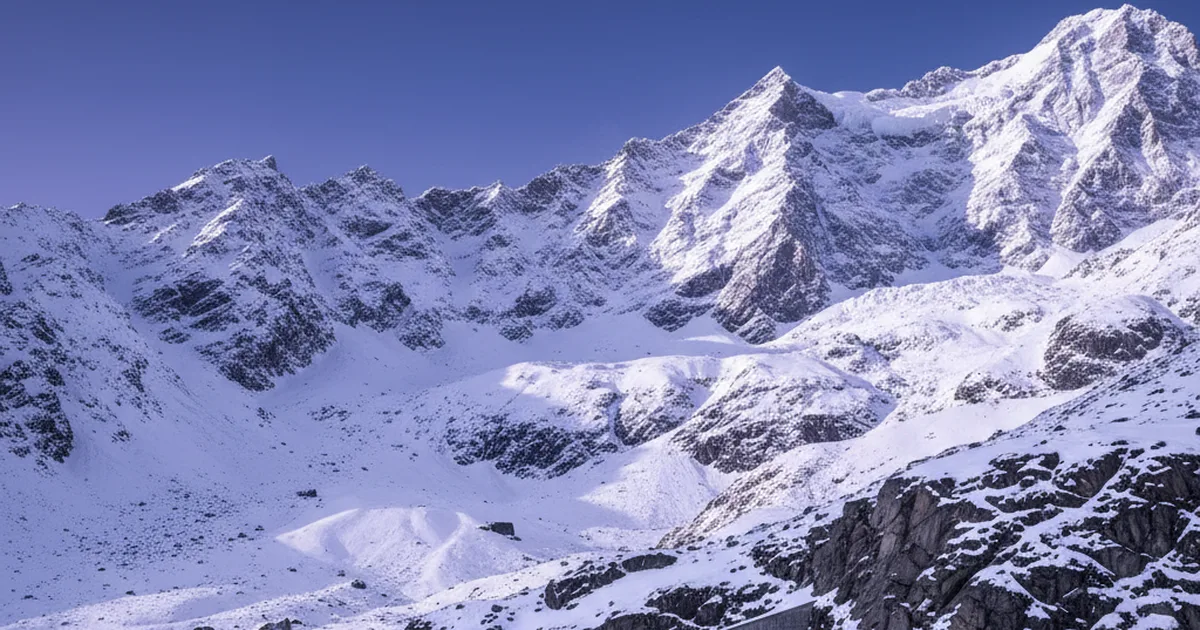

India’s highway infrastructure is undergoing a revolution, with advanced tunnel engineering projects transforming travel times and connectivity across the nation. The Atal Tunnel Rohtang stands as a testament to engineering excellence, while the Zojila Tunnel project promises to reshape Himalayan connectivity by 2028. According to the Ministry of Road Transport and Highways (MoRTH), India aims to complete tunnel projects totalling 331 km by 2026, marking unprecedented progress in mountain highway development.

Table of Contents
- Atal Tunnel Rohtang: A Game-Changer for Himachal Pradesh
- Zojila Tunnel: India’s Ambitious High-Altitude Project
- Engineering Marvels Behind India’s Tunnel Projects
- Impact on Connectivity and Travel Times
- Economic Benefits and Regional Development
- Upcoming Tunnel Projects Across India in 2026
- Challenges and Solutions in Himalayan Tunnel Construction
- Future of Mountain Highway Development in India
Atal Tunnel Rohtang: A Game-Changer for Himachal Pradesh
The Atal Tunnel Rohtang, officially named after former Prime Minister Atal Bihari Vajpayee, stands as India’s longest highway tunnel at 9.02 kilometres. This engineering marvel connects Manali to the Lahaul-Spiti region, reducing the journey distance from 49 km to just 25 km and travel time from 4-5 hours to approximately 30 minutes. Opened on October 3, 2020, the tunnel operates at an elevation of 3,060 metres, making it the highest altitude highway tunnel in the world.
The tunnel’s impact on Himalayan communities has been transformative. Winter closures that once isolated Lahaul-Spiti for 6-7 months are now eliminated, enabling year-round connectivity. As detailed in our expressway toll guide, heavy vehicles pay significantly lower tolls through the Atal Tunnel. The toll structure incentivizes commercial traffic, facilitating economic activity in the region. Economic data shows that local businesses, tourism, and agricultural exports have increased substantially since the tunnel’s inauguration.
Currently, the road to Atal Tunnel remains open throughout the year, having demonstrated excellent snow management and maintenance. Traffic volumes have exceeded initial projections, with over 2 lakh vehicles passing through annually. The tunnel features state-of-the-art safety systems including CCTV monitoring, ventilation systems, and emergency corridors designed to international standards.
| Feature | Details | Impact | Status |
| Length | 9.02 km | Longest highway tunnel in India | Operational since 2020 |
| Altitude | 3,060 metres | Highest altitude tunnel globally | World record holder |
| Journey reduction | 49 km → 25 km | 75% shorter route | Active benefit |
| Travel time | 4-5 hours → 30 minutes | 90% faster connectivity | Year-round |
| Toll category | ₹200-500 (vehicles) | Lower than mountain highways | Regular collection |
Zojila Tunnel: India’s Ambitious High-Altitude Project
The Zojila Tunnel, currently under construction on the Srinagar-Leh highway, represents India’s most ambitious tunnel project. Expected to be completed by February 2028, this 14.15-kilometre tunnel will surpass the Atal Tunnel as Asia’s longest. As of March 2025, MoRTH reports 64% construction completion, with a tunnel breakthrough scheduled for June 2026. The project cost exceeds ₹4,500 crore, representing a significant investment in Ladakh’s infrastructure.
The Zojila project will transform connectivity to Ladakh by reducing the Srinagar-Leh distance from 434 km to 323 km, and cutting travel time from 18 hours to just 6 hours. The tunnel’s construction involves overcoming extreme geological and weather challenges, including permafrost and high-altitude instability. Engineers have employed advanced technologies including jet grouting, rock bolting, and systematic tunnel support systems adapted to Himalayan conditions. This road connectivity comparison highlights how the Zojila Tunnel will revolutionize regional transport compared to alternative routes.
Economic implications are substantial. Ladakh’s tourism industry, currently constrained by seasonal road closures (5-6 months annually), will experience year-round accessibility. Agricultural exports and strategic connectivity will be significantly enhanced. The tunnel’s social impact includes improved healthcare access, education opportunities, and military logistics for India’s northern borders.
Engineering Marvels Behind India’s Tunnel Projects
India’s tunnel engineering represents cutting-edge technology adapted to Himalayan challenges. The Tunnel Boring Machine (TBM) methodology employed in Zojila uses 5.48-metre diameter drilling capabilities, advancing 10-15 metres daily under optimal conditions. Rock classification systems determine support requirements at each face, while real-time monitoring using laser scanning ensures precision and safety.
Ventilation systems are crucial in high-altitude tunnels where oxygen levels drop significantly. The Atal Tunnel employs a longitudinal ventilation system with 22 ventilation fans, maintaining air quality sufficient for all vehicle types. Similarly, Zojila will incorporate advanced HVAC systems designed for extreme conditions. Safety features include fire suppression systems, emergency refuges every 500 metres, and integrated communication networks.
Structural design incorporates multi-layered lining systems, with initial shotcrete application followed by concrete lining and waterproofing membranes. Steel ribs provide temporary support during construction, replaced by permanent reinforced concrete structures. These highway safety measures extend to tunnel operations, with regular inspections and maintenance protocols ensuring long-term durability.
| Technology | Application | Benefit | Status |
| TBM Drilling | Zojila Tunnel | Precision and speed | Active |
| Jet Grouting | Ground stabilization | Rock reinforcement | Ongoing |
| Longitudinal Ventilation | Atal Tunnel, planned Zojila | Air quality maintenance | Proven effective |
| Real-time Monitoring | All projects | Safety assurance | Implemented |
| Multi-layer Lining | Structural support | Long-term durability | Standard practice |
Impact on Connectivity and Travel Times
The combined effect of completed and upcoming tunnel projects is reshaping India’s mountain transportation network. The Atal Tunnel has already reduced vehicular emissions in the region by eliminating circuitous routes through lower elevations. Commercial vehicles formerly taking mountain passes now utilize the direct tunnel route, reducing fuel consumption and operational costs. For tourists and business travellers, journey predictability has improved dramatically—the Manali-Leh route no longer depends on weather forecasts.
When Zojila Tunnel opens, the Srinagar-Leh journey, currently 18+ hours with significant weather delays, will become a manageable 6-hour drive. This transformation will enable same-day travel for business meetings, medical appointments, and educational pursuits. The tourism industry anticipates expanded visitor flows to Ladakh, Kashmir, and Spiti regions, with multiplier effects across hospitality, retail, and service sectors.
From a logistics perspective, freight operators will benefit from predictable delivery schedules. The expressway rest stops guide outlines how improved connectivity is creating demand for modern facilities along tunnel-connected routes. Supply chain costs for remote regions are expected to decline by 15-20%, with implications for consumer prices in Ladakh and Himachal Pradesh.
Economic Benefits and Regional Development
Government data indicates that the Atal Tunnel has generated ₹300+ crore in economic activity through tourism, commerce, and employment creation. Ladakh’s GDP is projected to grow by 8-12% annually post-Zojila completion, driven by improved connectivity. Agricultural exports of apricots, walnuts, and woolens from Ladakh-Spiti will reach broader markets. The tunnel facilitates integration of these regions into India’s mainstream economy.
Employment opportunities abound during construction and operations phases. The Zojila project alone has created 5,000+ construction jobs, with hundreds of permanent positions for toll collection, maintenance, and safety personnel. Local contractor participation in tunnelling projects has built indigenous engineering capacity, benefiting future infrastructure development.
Strategic benefits include enhanced military logistics to the India-China border regions. Improved supply chains to forward areas strengthen India’s defence posture, enabling year-round operations where weather previously imposed 6-month constraints. This geopolitical dimension justifies the substantial public investment in high-altitude tunnel infrastructure.
Upcoming Tunnel Projects Across India in 2026
Beyond the Himalayan corridor, India’s tunnel development extends across diverse geographies. The Mumbai Coastal Road project includes multiple underwater and elevated tunnels, connecting Bandra to Worli and beyond. The Chennai-Salem expressway features several mountain tunnels, while the Thiruvananthapuram-Kanyakumari coastal corridor includes tunnel sections traversing Western Ghats terrain. According to NHAI projections, tunnel project completions will accelerate through 2026, with 331 km of completed tunnel length expected by year-end.
The Char Dham Pariyojana encompasses multiple tunnel projects connecting Uttarakhand pilgrimage sites. These include tunnels on the Rishikesh-Kedarnath route and Dehradun-Auli highway. Completion of these projects will reduce pilgrim journey times significantly, enabling safe and efficient access to religious sites. The Goregaon-Mulund Link Road in Mumbai, with a construction cost exceeding ₹2,000 crore, represents urban tunnel engineering at scale.
Private-sector participation is increasing in India’s tunnel development. Toll-based financing models enable faster project execution. The North-South Corridor in Delhi includes major tunnel sections, part of the broader push toward grade-separated intersections and underground transit in urban areas. These metro rail developments complement highway tunnel infrastructure, creating integrated multi-modal networks.
Challenges and Solutions in Himalayan Tunnel Construction
Himalayan tunnel construction faces formidable natural challenges. Permafrost at high altitudes presents geological instability—ice-rich soils soften at marginally elevated temperatures, compromising structural integrity. The Zojila Tunnel, traversing 3,580 metres elevation, encounters worst-case permafrost conditions. Engineers respond with continuous ground freezing techniques, maintaining sub-zero temperatures in adjacent rock mass even as tunnels are excavated.
Weather constraints limit construction windows. Himalayan winter closures (November-April) restrict material supply and workforce deployment. The Zojila project manages this through construction camps operating year-round, with heated facilities and continuous supply chain management. Avalanche risks are mitigated through extensive rock bolting, mesh reinforcement, and protective linings absorbing impact energy.
Water ingress is a persistent challenge in mountain tunnels. Seasonal snowmelt and glacial seepage infiltrate weak geological formations. Zojila employs comprehensive waterproofing systems, including grouting, geomembranes, and drainage channels directing water away from tunnel structures. Regular monitoring using piezometers detects pressure buildup before failures occur. These engineering solutions ensure tunnel longevity despite extreme mountain environments.
Future of Mountain Highway Development in India
India’s tunnel engineering trajectory shows acceleration. The completion of Atal and Zojila tunnels will serve as proof-of-concept for further Himalayan connectivity projects. The government’s 331-km tunnel completion target by 2026 demonstrates sustained commitment to mountain infrastructure development. Private sector participation, toll-based financing, and technology transfer from international firms will accelerate future projects.
Smart tunnel technologies are being integrated. IoT sensors monitoring structural health, traffic flow analysis systems, and automated incident response protocols represent the next generation of tunnel operations. Electric vehicle adoption will benefit from tunnel infrastructure, reducing emissions and operational costs compared to diesel vehicles navigating mountain passes. These developments position India as a leader in sustainable high-altitude infrastructure.
Long-term planning includes cross-border connectivity projects. The China-India border regions will benefit from improved Indian-side infrastructure, enhancing bilateral trade potential while addressing strategic concerns. The Trans-Himalayan corridor concept envisions integrated road and rail networks connecting Tibet, Nepal, and India through tunnel-based infrastructure. While ambitious, these projects reflect the transformative potential of engineering excellence applied to mountain environments.
Conclusion
India’s tunnel projects, led by the Atal Tunnel and Zojila Tunnel initiatives, represent engineering excellence combined with visionary infrastructure planning. These projects transcend mere transportation infrastructure—they reshape regional economies, enhance strategic connectivity, and demonstrate India’s capability in world-class engineering. The Atal Tunnel has already proven transformative for Himachal Pradesh, while Zojila promises similar benefits for Ladakh. As 331 km of tunnel projects approach completion through 2026, India’s mountain regions will experience unprecedented connectivity, enabling sustainable economic development aligned with environmental conservation. The future of mountain transportation in India is tunnel-based, technology-driven, and economically transformative.
You May Also Like: Expressway Toll Calculator Guide, Best Rest Stops and Dhabas on Indian Expressways 2026, and Highway Safety Tips for Long Drives.
Frequently Asked Questions
What is the Atal Tunnel Rohtang and why is it significant?
The Atal Tunnel Rohtang is India’s longest highway tunnel at 9.02 km, connecting Manali to Lahaul-Spiti at 3,060 metres altitude—the world’s highest. It reduces travel distance by 75% and time by 90%, enabling year-round connectivity and transforming the regional economy.
When will the Zojila Tunnel be completed?
The Zojila Tunnel is scheduled for completion by February 2028. As of March 2025, 64% of construction was complete, with tunnel breakthrough expected by June 2026. The project will be Asia’s longest tunnel at 14.15 km when finished.
How will the Zojila Tunnel impact travel between Srinagar and Leh?
Currently an 18+ hour journey subject to seasonal closures, the Srinagar-Leh route will reduce to 6 hours post-Zojila completion. The tunnel shortens the route from 434 km to 323 km and enables year-round connectivity previously impossible due to winter closures.
What are the toll charges for the Atal Tunnel?
Toll charges for the Atal Tunnel range from ₹200-500 depending on vehicle category. Two-wheelers pay ₹200, cars ₹300, commercial vehicles ₹500. These rates are lower than alternative mountain routes, incentivizing tunnel usage and regional commerce.
What engineering challenges are faced in Himalayan tunnel construction?
Major challenges include permafrost instability, seasonal weather constraints, water ingress, and avalanche risks. Solutions employ continuous ground freezing, comprehensive waterproofing, protective linings, and year-round construction management to overcome these obstacles.
How many kilometres of tunnel projects will be completed by 2026?
According to MoRTH, India aims to complete 331 km of tunnel projects by 2026. This includes completions across Himalayan routes, metro projects, and urban expressway initiatives, representing unprecedented infrastructure development speed.
What economic benefits have resulted from the Atal Tunnel?
The Atal Tunnel has generated over ₹300 crore in economic activity through tourism, commerce, and employment. It has increased regional GDP growth, facilitated agricultural exports, and created permanent infrastructure-related jobs while eliminating winter isolation.