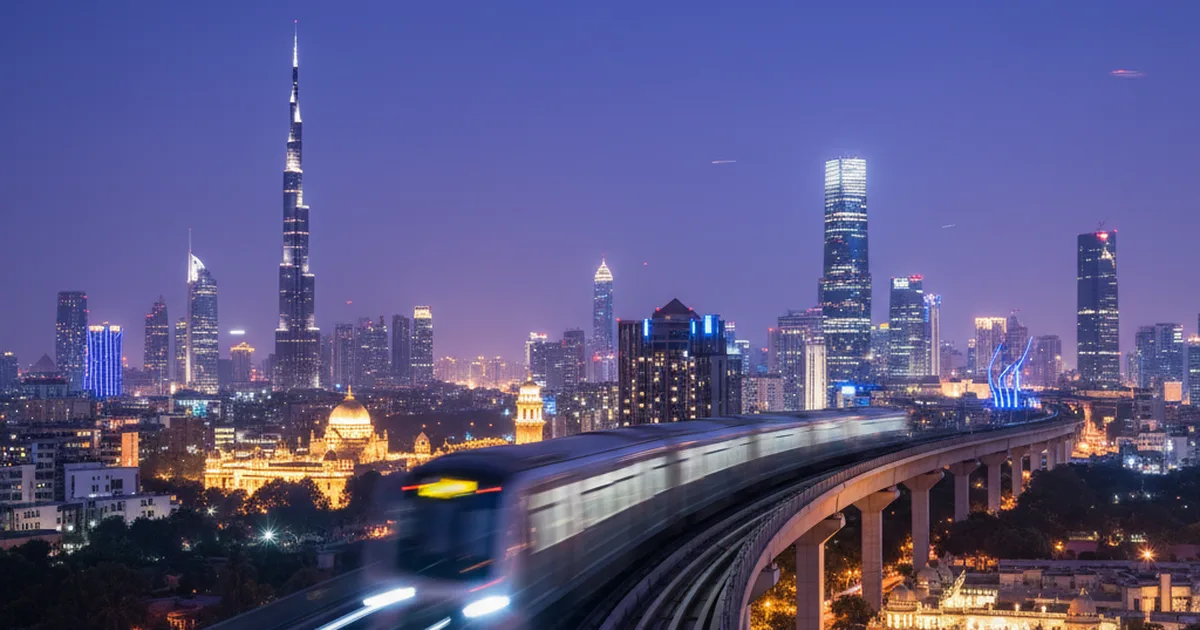

India’s metro rail systems have transformed urban mobility in the past decade, serving over 36.5 billion passengers annually across fifteen major cities as of 2025. The Delhi Metro, Mumbai Metro, and Bengaluru Metro stand out as India’s most extensive and technologically advanced systems, collectively carrying millions of commuters daily. This 2026 guide provides a comprehensive comparison of these three metro networks—covering route expansion, ridership, fares, safety features, and passenger experience—to help travelers and urban planners understand how India’s rapid transit systems are reshaping city connectivity and sustainability.
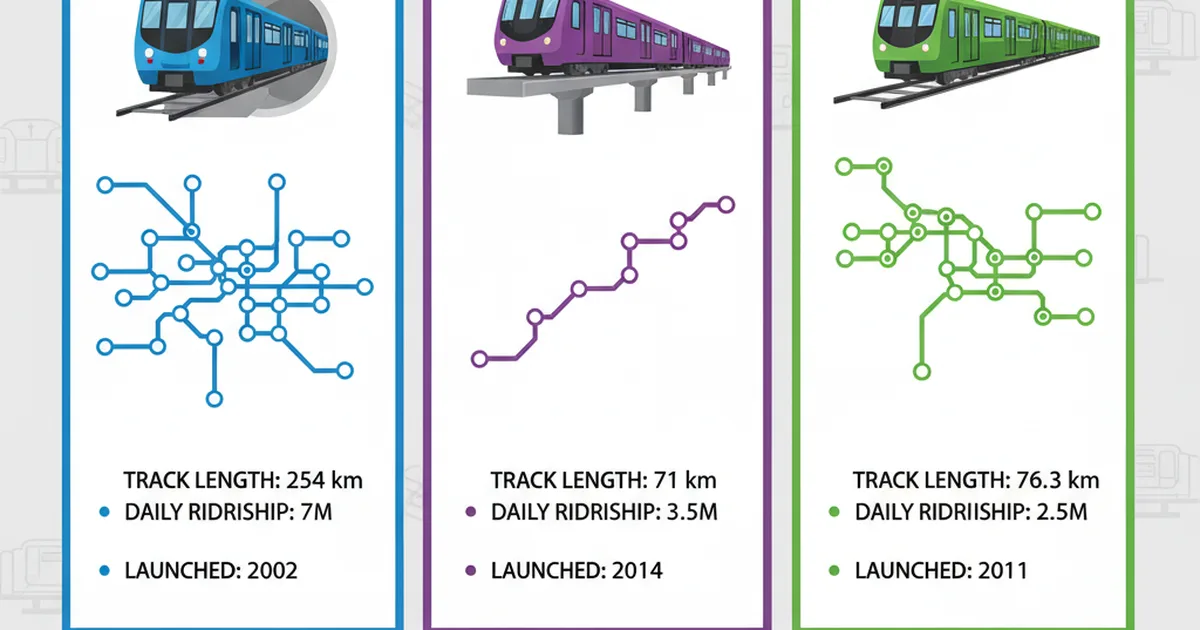
Table of Contents
- Delhi Metro: India’s Largest Network
- Mumbai Metro: Rapid Expansion & Challenges
- Bengaluru Metro: Growing Efficiency
- 2026 Expansion & Projects Table
- Fares & Ridership Comparison
- Safety Features & Technology
- Ridership & Performance Table
- Future Outlook & Investment
- Frequently Asked Questions
Delhi Metro: India’s Largest Network
The Delhi Metro is India’s largest rapid transit system, with an operational length of 254 kilometers across 12 lines and 286 stations as of 2026. Launched in 1995, it has become the backbone of Delhi’s transport infrastructure, serving approximately 7 million passengers daily. The system is known for its reliability, extensive geographic coverage, and integration with the city’s overall mobility ecosystem. The recently opened Phase 5B expansion added 114 kilometers of new track, connecting previously underserved suburban areas including parts of Ghaziabad, Noida, and Gurugram. According to the Ministry of Railways, the Delhi Metro has reduced road congestion by approximately 15% in central Delhi and significantly decreased vehicular emissions.
The Delhi Metro operates with an average frequency of 2–3 minutes during peak hours, making it exceptionally convenient for commuters. Fares are structured by distance, starting from ₹10 for journeys up to 2 kilometers and capping at ₹60 for journeys beyond 40 kilometers. Smart Cards and contactless payments are widely accepted, streamlining ticket purchasing. As covered in our guide on intercity rail connectivity from Delhi, the Metro’s efficiency has made it a model for other Indian cities. Safety features include CCTV surveillance on all trains and stations, trained personnel, and regular platform screen door maintenance. However, overcrowding during peak hours (7–9 AM, 5–7 PM) remains a challenge, particularly on central corridors. The system is currently working on automated driverless trains for its future expansions, with pilot programs expected to launch in 2026–27.
Mumbai Metro: Rapid Expansion & Challenges
The Mumbai Metro system, operated by Mumbai Metropolitan Region Development Authority (MMRDA), is India’s second-largest metro network with approximately 71 kilometers of operational track across 3 lines as of 2026. Line 1 (Red Line, 11.4 km), Line 2A (Purple Line, 22.56 km), and Line 3 (Blue Line, 37.96 km) serve major corridors connecting Versova to Andheri, Seepz to Chembur, and Colaba Seashore to Aqua. The system is designed to handle Mumbai’s dense urban population and is expected to add over 180 kilometers by 2030, including Line 5, Line 6, and extensions of existing lines. By 2026, the average daily ridership on operational lines is approximately 3.5 million passengers, though the network’s limited coverage compared to other cities keeps utilization rates below potential.
Mumbai Metro fares are competitive, starting at ₹10–₹20 for short journeys and capping at ₹55 for journeys beyond 40 kilometers. A 10-journey pass is available for regular commuters, offering a 10% discount. Unlike the Delhi Metro, the Mumbai system has struggled with project delays and construction challenges due to underground tunneling in a densely built environment and the presence of water bodies. However, the new lines being commissioned are state-of-the-art, featuring modern signaling systems, WiFi at stations, and air-conditioned trains—improvements that weren’t available on earlier lines. The Blue Line (Line 3), operational since October 2023, is particularly notable for its modern design and connection to key residential and commercial hubs across Mumbai. Safety protocols include women-only coaches, platform screen doors, and real-time passenger information systems. By 2026, Mumbai’s metro system is expected to reduce road traffic by up to 12% and contribute to the city’s sustainable transport goals.
Bengaluru Metro: Growing Efficiency
The Bengaluru Metro Rail Corporation Limited (BMRCL) operates Bengaluru’s rapid transit system, with 76.3 kilometers of track across 2 lines as of 2026: the Green Line (57.3 km) and the Purple Line (19 km). Launched in 2011, the system is younger than both Delhi and Mumbai metros but has grown steadily to serve approximately 2.5 million passengers daily. The network connects key IT hubs, commercial districts, and residential areas, making it essential for Bengaluru’s tech-driven economy. Two additional lines (Yellow Line and Red Line) are under construction, expected to add 77 kilometers by 2030. The system is designed with future driverless train capabilities, positioning Bengaluru as India’s most forward-looking metro system in terms of automation. Train frequency averages 2–3 minutes during peak hours, comparable to Delhi Metro.
Bengaluru Metro fares start at ₹10 for up to 2 kilometers and extend to ₹60 for journeys exceeding 40 kilometers. The system is known for its customer-centric approach, offering an app-based smart ticketing system, real-time train tracking, and seamless integration with local bus transit. As part of Bengaluru’s efforts to align with sustainable transport models similar to intercity train networks, the metro has reduced private vehicle usage among commuters by up to 8%. Safety features are comprehensive, including automated platform screen doors, AI-powered surveillance systems, and dedicated female security personnel on every train. However, the system faces capacity constraints on its most popular routes, particularly the Green Line during peak hours, as it wasn’t originally designed for current ridership levels. Bengaluru Metro’s Phase 2B expansion, to be completed by 2027, is expected to alleviate congestion and connect more suburban areas.
| Metro System | Operational Length (2026) | Number of Lines | Major Expansion (2026–2027) | Expected Cost |
|---|---|---|---|---|
| Delhi Metro | 254 km | 12 lines | Phase 5B: 114 km (completed) | ₹25,000 crore (already spent) |
| Mumbai Metro | 71 km | 3 lines | Lines 5, 6 & extensions: 180 km (2026–2030) | ₹100,000+ crore (approved) |
| Bengaluru Metro | 76.3 km | 2 lines | Phase 2B: Yellow & Red Lines: 77 km (2026–2027) | ₹18,000+ crore (under construction) |
Fares & Ridership Comparison
All three metro systems employ distance-based fare structures to ensure equitable pricing. Delhi Metro remains the most economical, starting at ₹10 and capping at ₹60, with an average trip cost of ₹22. Mumbai and Bengaluru offer similar starting fares of ₹10–₹20 but cap at ₹55–₹60. Monthly passes and smart cards offer discounts ranging from 10–15% across all systems, making metro travel affordable for regular commuters. A 2025 study by the Centre for Urban Policy Research found that metro commuters in these three cities save approximately ₹3,000–₹5,000 monthly compared to private vehicle ownership, including fuel, parking, and maintenance costs. This economic advantage has driven metro adoption, with Delhi Metro’s ridership increasing at 8% annually, Mumbai Metro at 12%, and Bengaluru Metro at 10% year-on-year.
Peak-hour and off-peak ridership patterns differ significantly across the three systems. Delhi Metro’s 12-line network distributes passenger load more evenly, reducing bottlenecks on individual corridors. Mumbai Metro’s 3-line structure concentrates traffic on fewer routes, resulting in higher occupancy rates (sometimes exceeding 120% during peak hours) on popular segments. Bengaluru Metro exhibits balanced ridership with good corridor distribution, though the Green Line experiences congestion on segments connecting IT parks to the city center. Revenue generation from fares is supplemented by advertising, station rentals, and property development around metro stations—a model pioneered by Delhi Metro and adopted by the other two systems. According to 2026 data, Delhi Metro generates approximately ₹1,800 crore annually from operations, while Mumbai Metro and Bengaluru Metro are projected to reach ₹800 crore and ₹450 crore respectively by 2027.
| Metric | Delhi Metro | Mumbai Metro | Bengaluru Metro |
|---|---|---|---|
| Daily Ridership (2026) | 7.0 million | 3.5 million | 2.5 million |
| Average Trip Fare | ₹22 | ₹28 | ₹25 |
| Train Frequency (Peak) | 2–3 min | 2–3 min | 2–3 min |
| Annual Revenue (est.) | ₹1,800 crore | ₹800 crore | ₹450 crore |
| Coverage Area | ~600 sq km | ~200 sq km | ~180 sq km |
Safety Features & Technology
All three metro systems prioritize passenger safety with internationally recognized protocols. Delhi Metro’s comprehensive security includes CCTV surveillance on all trains and platforms, emergency communication systems, and trained rapid response personnel at every station. The system has invested in AI-powered behavior detection systems to identify suspicious activity, though privacy considerations have led to measured implementation. Mumbai Metro’s newer lines (Lines 2A and 3) feature advanced platform screen doors that open only when trains are properly aligned, eliminating the risk of falls. Bengaluru Metro utilizes integrated ticketing systems that track passenger movement patterns, enabling better crowd management during peak hours. All three systems operate dedicated women-only coaches during peak hours, with personnel stationed to ensure passenger comfort and safety.
In terms of operational technology, Delhi Metro leads in digitalization with a centralized traffic control system managing all 12 lines from a single command center. The system uses real-time data analytics to optimize train routing, reduce delays, and predict maintenance needs. Mumbai Metro is implementing similar systems on newly commissioned lines, with plans for full integration by 2027. Bengaluru Metro has incorporated IoT sensors on its fleet to enable predictive maintenance, reducing unscheduled breakdowns by 23% compared to conventional maintenance schedules. All three metros are working toward integrated mobility platforms that combine metro with bus services, ride-sharing, and auto-rickshaw aggregators, enabling seamless last-mile connectivity. By 2026, unified payment systems using RuPay or UPI cards are becoming standard across all three systems, eliminating the need for separate metro cards.
Future Outlook & Investment
India’s metro rail sector is experiencing unprecedented growth, with the Ministry of Housing and Urban Affairs targeting 1,000 kilometers of metro networks by 2030 across 25 cities. The approved metro budget for 2025–26 stands at ₹29,550 crore, a fivefold increase compared to 2014–15. Delhi Metro’s Phase 5B expansion, completed in 2026, will set the stage for Phase 6 planning, expected to add another 150 kilometers. Mumbai Metro’s aggressive expansion program aims to make the system a primary commute mode for 40% of the city’s population by 2030, up from current 8%. Bengaluru Metro’s Phase 2B expansion is designed to serve the city’s continued tech-sector growth, connecting emerging IT hubs in outer regions like Yeshwantpur and Sarjapur.
Investment sources for metro expansion include central government grants, state government funding, operational revenue, and public-private partnerships (PPPs). Japan’s Asian Development Bank (ADB), the World Bank, and China’s AIIB have financed portions of metro projects, bringing international expertise and technology. As India moves toward sustainable urban transport, metros are increasingly integrated with electric bus networks, cycle tracks, and pedestrian zones. By 2030, India’s major metros are expected to generate cumulative revenues exceeding ₹50,000 crore annually while reducing road congestion, air pollution, and vehicular emissions by 15–25% in their respective cities. The 2026 outlook for Delhi, Mumbai, and Bengaluru metros is one of continued expansion, technological advancement, and improving passenger experience.
You May Also Like
You May Also Like: New Delhi to Mumbai Train Route – The Lifeline of India’s Rail Network, Best Weekend Road Trips from Delhi, Mumbai, Bengaluru & Chennai, and Delhi to Shimla Railway Trip – Complete Travel Guide.
Frequently Asked Questions
Which Indian metro system is the largest?
The Delhi Metro is India’s largest rapid transit system with 254 kilometers of track across 12 lines and 286 stations as of 2026. It serves approximately 7 million passengers daily.
What are the cheapest metro fares in India?
Delhi Metro offers the lowest fares, starting at ₹10 for up to 2 kilometers and capping at ₹60. Mumbai Metro and Bengaluru Metro have similar starting fares but slightly higher caps (₹55–₹60).
How many lines does Mumbai Metro have in 2026?
Mumbai Metro operates 3 lines as of 2026: the Red Line (Line 1), Purple Line (Line 2A), and Blue Line (Line 3), with a combined length of 71 kilometers. Lines 5 and 6 are under construction.
Is Bengaluru Metro safe for women travelers?
Yes, all three metros have dedicated women-only coaches during peak hours with trained personnel. Bengaluru Metro also features AI-powered surveillance systems and emergency communication buttons on all trains.
What is the average daily ridership on India’s metros in 2026?
Delhi Metro leads with 7 million daily passengers, followed by Mumbai Metro with 3.5 million and Bengaluru Metro with 2.5 million passengers.
When will Mumbai Metro’s new lines be completed?
Mumbai Metro Lines 5 and 6 are expected to be completed between 2026 and 2030. Line 6 is scheduled to open sections in 2026, with full completion by 2028.
Are metro systems in India integrated with bus services?
Yes, all three metros are working on integrated mobility platforms combining metro with bus services and ride-sharing options. Unified payment systems using RuPay or UPI are becoming standard by 2026.