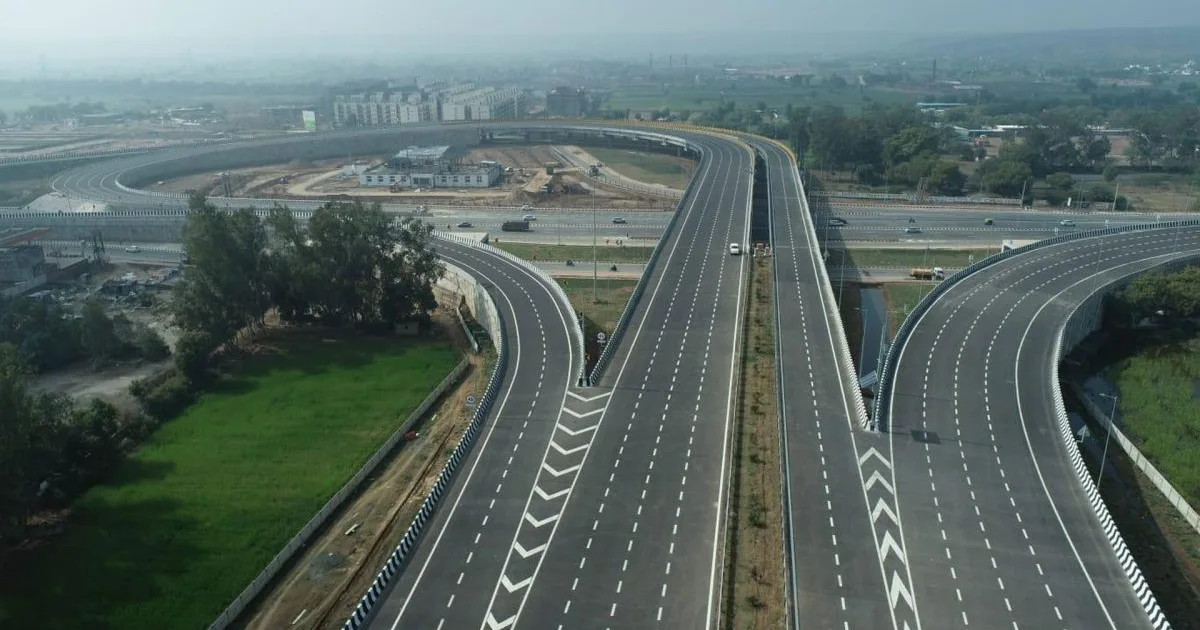

India’s longest expressway just changed the definition of long-distance driving. Here is everything you need to plan your journey — route map, tolls, stops, tips, and more.
📋 Table of Contents
- Introduction: A New Era of Road Travel
- Route Overview
- Major Route Segments
- Toll Charges & Costs
- Highlights Along the Route
- Economic & Logistics Impact
- Policy and Governance Framework
- Social & Regional Impact
- Suggested 2–3 Day Itinerary
- Pro Travel Tips
- Frequently Asked Questions
🚗 Introduction: A New Era of Road Travel
The Delhi–Mumbai Expressway (DME) is India’s most ambitious road project, reducing the distance between the national capital and the financial hub from 1,424 km to just 1,242 km. With a design speed of 120 km/hr, it promises to cut travel time from 24 hours to just 12–13 hours.
Whether you’re a road trip enthusiast, a trucker, or a family heading for vacation, this expressway offers a world-class driving experience with smooth roads, multiple lanes, and smart traffic systems.
Also read: Delhi to Manali Road Trip Guide – Routes, Distance, Stops & Travel Tips
And yes — if Bollywood taught us anything from movies like Zindagi Na Milegi Dobara, a road trip is about journey + memories, not just the destination.
🛣 Delhi–Mumbai Expressway Route Overview
Quick Route Facts Starting Point: Sohna, Haryana (Delhi NCR) | Ending Point: JNPT (Jawaharlal Nehru Port), Mumbai
Total Distance: 1,242 km | States Covered: Haryana → Rajasthan → Madhya Pradesh → Gujarat → Maharashtra
Travel Time: ~12–13 hours (vs. 24 hours earlier)
Geographically, the expressway spans five Indian states — from Sohna (28.3°N, 77.0°E) to JNPT, Mumbai (18.9°N, 73.0°E) — linking North and West India through an uninterrupted, high-speed corridor.
Prefer rail travel? If you’re comparing road versus rail for the Delhi–Mumbai corridor, check out our in-depth look at the New Delhi to Mumbai Train Route — one of the busiest railway corridors in the country.
📍 Major Route Segments
| Segment | Distance (approx.) | Key Stops / Cities | Driving Time |
|---|---|---|---|
| Delhi (Sohna) → Jaipur (Dausa) | 200 km | Dausa (first opened section in 2023) | 2.5 hrs |
| Jaipur → Kota | 190 km | Bundi, Chambal River Bridge | 2.5 hrs |
| Kota → Ratlam (MP) | 200 km | Neemuch, Tribal Belt | 2.5 hrs |
| Ratlam → Vadodara (Gujarat) | 300 km | Dahod, Anand | 3.5 hrs |
| Vadodara → Surat | 150 km | Bharuch Bridge, Surat City | 2 hrs |
| Surat → Mumbai (JNPT) | 200 km | Vapi, Thane, Navi Mumbai | 3 hrs |
Driving through Rajasthan gives you a taste of the same royal landscapes you’d experience on the Jaipur to Udaipur road trip — a scenic detour worth considering if you have an extra day to spare.
💰 Toll Charges & Costs on Delhi–Mumbai Expressway
Toll plazas are equipped with FASTag for seamless digital payment. Charges depend on vehicle type and distance traveled.
| Vehicle Type | Approx. Toll (Full Stretch) | Notes |
|---|---|---|
| Car / Jeep / SUV | ₹3,500 – ₹4,000 | One-way trip |
| Light Commercial Vehicle | ₹7,000 – ₹8,000 | Trucks, small goods vehicles |
| Heavy Trucks / Trailers | ₹15,000+ | Depends on axle load |
Additional Costs to Consider
- Fuel: ~₹7,000–₹9,000 for a round trip (depending on mileage)
- State Taxes: No separate state entry tax for private vehicles, though commercial vehicles may incur additional charges.
- Facilities: Fuel stations, EV charging points, and rest areas are built every 30–40 km.
🏞 Highlights Along the Route
Smart Features
- CCTV monitoring, AI-driven traffic management, and real-time safety alerts
- SOS call booths, trauma centers, and 120 km/hr speed regulation
- Dedicated emergency lanes for medical and breakdown assistance
Eco-Friendly Touch
- Over 20 lakh trees planted along the corridor
- 94 km of wildlife crossings, the first of its kind in Asia
- Solar-powered EV charging stations and renewable lighting every 50–60 km
- Rainwater harvesting, noise barriers, and green landscaping in sensitive zones
Tourist Stops Along the Way
- Jaipur: The Pink City’s historic charm — forts, palaces, and Rajasthani cuisine
- Kota: Famous for bridges and education hub — the Chambal riverfront is a hidden gem
- Vadodara: Gujarat’s cultural capital — museums, temples, and local snacks
- Surat: City of diamonds and textiles — don’t leave without tasting the local Surti undhiyu
Once you reach Mumbai, consider the iconic coastal drive: Mumbai to Goa Coastal Drive Road Trip Guide
📈 Economic and Logistics Impact
The Delhi–Mumbai Expressway isn’t just transforming travel — it’s revolutionizing logistics and trade across India’s industrial backbone.
- Cuts logistics costs by 10–15%, making goods transport faster and cheaper
- Shortens delivery timelines for export zones in Haryana, Gujarat, and Maharashtra
- Reduces carbon emissions by 300,000+ tonnes annually
- Improves connectivity between freight terminals, dry ports, and SEZs
Managed by the National Highways Authority of India (NHAI), the DME is part of India’s Smart Highway Corridor Initiative. It’s built with a modular, expandable design — currently 8 lanes, scalable to 12 — to accommodate future traffic growth.
🏛 Policy and Governance Framework
The Delhi–Mumbai Expressway is a flagship project under the Bharatmala Pariyojana and aligned with the PM Gati Shakti initiative, both focused on integrated infrastructure development and logistics efficiency.
These programs aim to create a seamless national highway network connecting India’s economic hubs, reducing logistics time, and boosting manufacturing competitiveness under Make in India.
For those interested in how India’s railway network complements this highway ambition, the Howrah to Chennai Train Route guide is an excellent companion read — it illustrates how road and rail corridors together bind India’s mega-cities.
🌍 Social & Regional Impact
Beyond freight and travel, the DME is driving social and economic transformation along its route:
- Generates local employment during construction and operation phases
- Boosts tourism and hospitality in emerging towns like Dausa, Dahod, and Ratlam
- Encourages small business growth — fuel stations, food plazas, repair shops, and logistics depots
- Improves connectivity for rural populations, providing faster access to education, healthcare, and markets
This blend of economic opportunity and regional upliftment positions the DME as a true development corridor, not just a highway.
🎬 Bollywood Connections & Fun Facts The smooth desert stretches in Rajasthan give vibes of Jab We Met’s road sequences. The scenic Gujarat section feels like a backdrop from Kai Po Che. If your gang hits this route, it feels like your own Dil Chahta Hai adventure — long drives, highway dhabas, and endless laughter.
🎥 Fun Fact: Once fully operational, it will be India’s longest expressway, spanning 8 lanes expandable to 12.
🛑 Suggested Road Trip Itinerary (2–3 Days)
| Day | Route | Distance | Must-Do Activities |
|---|---|---|---|
| Day 1 | Delhi → Jaipur → Kota | ~400 km | Stop at Jaipur for local food, continue to Kota |
| Day 2 | Kota → Vadodara | ~500 km | Explore Bundi Fort, overnight stay in Vadodara |
| Day 3 | Vadodara → Surat → Mumbai | ~340 km | Quick halt in Surat for shopping, drive to Mumbai |
Adventure seekers can complete the trip in 12–13 hours nonstop, but overnight breaks are safer and more fun.
If you’re planning to extend your trip beyond Mumbai, the Mumbai to Goa coastal drive is the perfect next leg — one of India’s most iconic highway stretches along the Arabian Sea.
For future readers: a dedicated Vadodara to Mumbai Expressway Section Guide and a Delhi to Jaipur Expressway Travel Tips are planned for this site. Stay tuned!
📝 Pro Travel Tips
🌤 Best Time to Travel Winter (Nov–Feb) for pleasant weather across Rajasthan and Gujarat.
🍽 Food Stops Authentic dhabas and modern food courts every 100 km — never go hungry on this route.
🌙 Night Driving Avoid unfinished stretches (still under phased completion in 2026) after dark.
⚡ EV Owners Fast-charging stations every 50–60 km, powered by solar grids. Plan your stops in advance.
🚦 Safety First Strict enforcement of speed limits (max 120 km/hr); AI cameras monitor lane discipline around the clock.
🛡 FASTag Ready Keep your FASTag active; tolls are automatic through RFID scanning at all plazas.
🔧 Maintenance Operated by NHAI with 24×7 maintenance teams. SOS booths are placed every 25 km.
🗺 Navigation Google Maps and MapmyIndia both support live route data for the expressway — use offline maps as backup.
Planning another epic road adventure from the north? Don’t miss the Delhi to Manali Road Trip Guide — a completely different kind of drive through the Himalayas, packed with scenic routes and mountain tips.
❓ Frequently Asked Questions (FAQs)
Q1: What is the total distance of the Delhi–Mumbai Expressway?
1,242 km, reducing the earlier distance of 1,424 km by nearly 182 km. The expressway runs from Sohna, Haryana (near Delhi NCR) all the way to JNPT, Navi Mumbai.
Q2: How long does it take to drive from Delhi to Mumbai via the DME?
Around 12–13 hours for cars and 15–16 hours for trucks or heavy vehicles — down from 24 hours on the old route.
Q3: What is the toll rate for cars on the Delhi–Mumbai Expressway?
Approximately ₹3,500–₹4,000 for a one-way trip by car or SUV (may vary slightly by section). FASTag is mandatory at all toll plazas.
Q4: Are there EV charging stations along the route?
Yes. Solar-powered fast-charging stations for electric vehicles are available every 50–60 km along the expressway, making it fully EV-friendly.
Q5: Which cities does the expressway pass through?
Major cities include Jaipur, Kota, Ratlam, Vadodara, Surat, and Navi Mumbai. The expressway passes through Haryana, Rajasthan, Madhya Pradesh, Gujarat, and Maharashtra.
Q6: Who manages and maintains the expressway?
The project is managed by NHAI (National Highways Authority of India) under the Bharatmala Pariyojana and PM Gati Shakti initiative, featuring AI-enabled monitoring and 24×7 maintenance teams.
Q7: What is the best time to drive the Delhi–Mumbai Expressway?
The best time is November through February (winter), when temperatures are cool and driving conditions are comfortable across all five states on the route.
Q8: Is the Delhi–Mumbai Expressway fully open in 2026?
Most sections are open and operational in 2026. Some stretches are still under phased completion. It is recommended to avoid night driving on unfinished sections until full operationalization is confirmed.
🎯 Ready to Hit the Road?
The Delhi–Mumbai Expressway is more than just a road — it’s a symbol of India’s new infrastructure era. It connects people, economies, and opportunities, redefining what long-distance travel means. Whether it’s a business trip or a family getaway, this route offers unmatched speed, safety, sustainability, and scenery.
So pack your bags, cue your Bollywood road trip playlist (“Dil Chahta Hai” is mandatory 🎶), and drive into a journey you’ll remember forever.
Frequently Asked Questions
How long is the Delhi-Mumbai Expressway?
The Delhi-Mumbai Expressway (NH-48) is 1,386 km long — India’s longest expressway. It connects Delhi to Mumbai via Haryana, Rajasthan, Madhya Pradesh, and Gujarat.
How long does it take to drive Delhi to Mumbai on the expressway?
At an average speed of 100 km/h, the drive takes approximately 14-16 hours non-stop. With overnight stays and rest stops, most travellers complete it over 2 days.
What toll will I pay on the Delhi-Mumbai Expressway?
The approximate toll for a car (LMV) on the full Delhi-Mumbai Expressway is Rs 1,200-1,500. It uses distance-based tolling, so you only pay for the distance you actually travel.
What are the major cities on the Delhi-Mumbai Expressway route?
Key cities: Delhi, Gurugram, Sohna, Dausa, Kotputli, Jaipur (bypass), Tonk, Bundi, Kota, Ratlam, Vadodara (bypass), Surat, and Mumbai (Virar).
Is the Delhi-Mumbai Expressway fully open in 2026?
Most sections are operational as of 2026. Some stretches through Madhya Pradesh and Gujarat had progressive openings in 2023-24. The full 1,386 km is now largely accessible.
What is the speed limit on the Delhi-Mumbai Expressway?
The speed limit is 120 km/h for cars and 80 km/h for trucks and buses. Speed cameras and overhead gantries enforce limits throughout.
Are there fuel stations and rest areas on the route?
Yes. NHAI wayside amenities (fuel, food, restrooms) are located approximately every 50-80 km along the expressway. Use the NHAI One app to locate the nearest facility on your route.