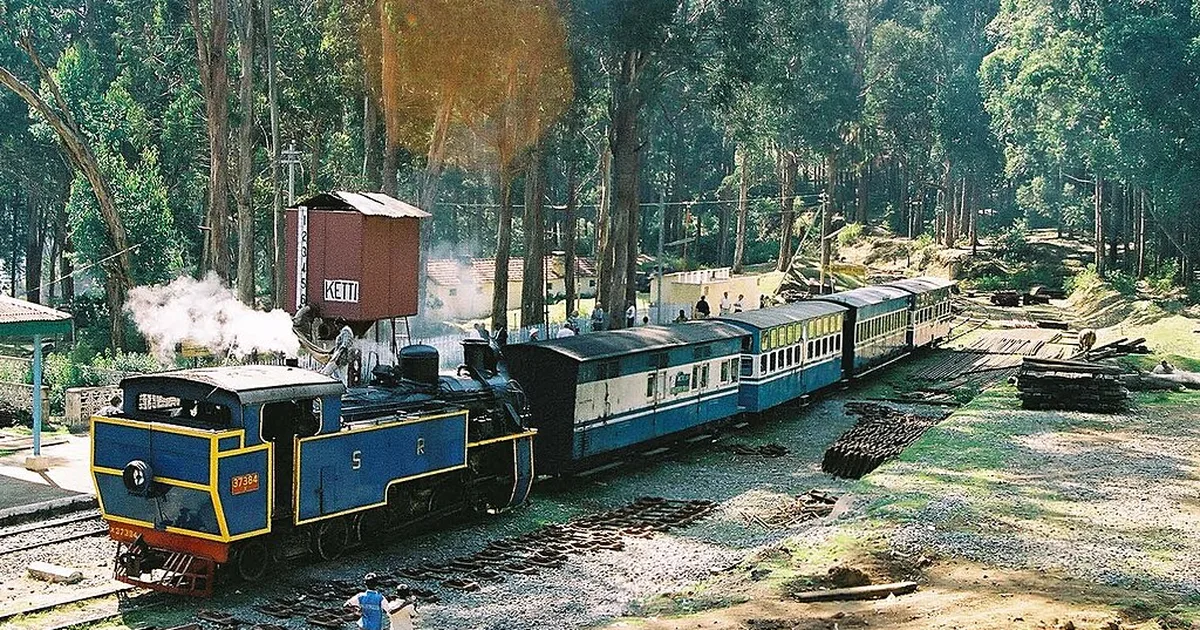

If you’re looking for a train ride that feels nothing like your regular commute, the Mettupalayam to Ooty train route is in a league entirely its own. Winding through misty valleys, dense forests, and terraced tea gardens, the Nilgiri Mountain Railway (NMR) is one of India’s most treasured heritage journeys — and one of the most photographed too.
Known affectionately as the “toy train,” this narrow-gauge railway climbs nearly 2,000 meters in altitude over roughly 46 kilometers, using a remarkable engineering mechanism called a rack-and-pinion system. It’s the only railway of its kind in India, and it has been a UNESCO World Heritage Site since 2005 — a designation shared by just a handful of mountain railways worldwide, including the celebrated Kalka to Shimla Railway and the New Jalpaiguri to Darjeeling Himalayan Railway.
Whether you’re a history enthusiast, a nature lover, or simply someone chasing the thrill of a scenic train journey, this guide covers everything you need to know before you board.
Route Overview: Key Facts at a Glance
- Route Name: Nilgiri Mountain Railway (NMR)
- Total Distance: ~46 km
- Journey Time: 5–6 hours (uphill) | ~3.5 hours (downhill)
- Gauge: Narrow Gauge (Meter gauge section from Mettupalayam to Kallar; rack section beyond)
- Altitude Range: 326 m (Mettupalayam) → 2,200 m (Ooty/Udhagamandalam)
- Year Opened: 1899
- UNESCO Status: World Heritage Site (inscribed 2005)
- Traction System: Rack-and-pinion (India’s only rack railway)
- Tunnels / Bridges / Curves: 16 tunnels | 250 bridges | 208 curves
The journey begins in Mettupalayam, a small town about 50 km from Coimbatore, and slowly climbs into the Nilgiri Biosphere Reserve — passing through lush Shola forests, cascading waterfalls, and quaint colonial-era stations — before arriving at Udhagamandalam (Ooty), the “Queen of Hill Stations.”
Major Stations Along the Way
Each stop on this route has its own character, and several are worth stepping off the train for — even briefly.
| Station | Altitude (m) | Highlights |
|---|---|---|
| Mettupalayam | 326 m | Starting point; connect from Coimbatore by road or local train |
| Kallar | 405 m | Gateway to the Nilgiris; lush forest entry; rack section begins nearby |
| Hillgrove | 1,091 m | Popular mid-journey refreshment stop; frequent monkey sightings |
| Coonoor | 1,858 m | Famous for Nilgiri tea estates; beautiful viewpoints; joy rides start here |
| Lovedale | 2,211 m | Serene, quiet station surrounded by pine forests |
| Udhagamandalam (Ooty) | 2,200 m | Final destination; Ooty Lake, Botanical Gardens, local markets |
💡 Pro Tip: Consider breaking your journey at Coonoor. The town is quieter than Ooty, has stunning tea estates, and offers the famous Sim’s Park — a botanical garden at 1,800 m altitude. You can resume to Ooty the same day.
A Brief History of the Nilgiri Mountain Railway
The Nilgiri Mountain Railway was built during the British colonial era, with construction beginning in 1891 and the line officially opening in 1899. It was engineered to give the British administration and their families easy access to the cool hill stations of the Nilgiris — away from the scorching heat of the plains.
The Swiss-inspired rack-and-pinion system was chosen specifically for the steep gradients of the Nilgiri slopes, some as steep as 1 in 12.5 — the steepest in all of Asia. This means for every 12.5 meters traveled horizontally, the train rises 1 meter vertically — a gradient no conventional adhesion railway can handle.
The train gained worldwide cultural fame when A.R. Rahman’s iconic “Chhaiya Chhaiya” song from the Bollywood film Dil Se (1998) was filmed atop a moving Nilgiri Mountain Railway train. That unforgettable sequence — dancers on the roof, forests flying past — brought the NMR to the attention of millions.
For those who enjoy exploring India’s mountain railway heritage, the Darjeeling Himalayan Railway offers a similarly stunning Himalayan experience, while the Kalka to Shimla Railway winds through the Shivalik Hills of Himachal Pradesh — all three are part of the same UNESCO inscription.
Train Timings and Schedule
There are a limited number of trains operating on this route daily, so planning ahead is essential. Below are the main services:
| Train Name / Number | Departure (MTP) | Arrival (OOT) | Travel Time | Notes |
|---|---|---|---|---|
| 56136 MTP–UAM Passenger | 07:10 AM | ~12:00 PM | ~5 hrs | Main heritage toy train; most popular |
| 56137 UAM–MTP Passenger | 2:00 PM (from Ooty) | ~5:35 PM | ~3.5 hrs | Downhill return; faster journey |
| Joy Ride (Coonoor–Ooty) | Varies | ~1 hr later | ~1 hr | Short tourist ride; ideal for day visitors |
Always verify the latest timings on the official IRCTC website or at the railway counter before your trip, as schedules can change seasonally.
How to Book Tickets for the Nilgiri Mountain Railway
Booking your seat in advance is strongly recommended — especially between October and May, when tourist footfall peaks. Here’s how to do it:
- Visit the IRCTC website (irctc.co.in) or download the IRCTC Rail Connect app.
- Search under “Special Trains” or type the train number directly (56136 for Mettupalayam to Ooty).
- Select your preferred class: First Class (FC) for more comfort and larger windows, or Second Sitting (2S) for a budget-friendly ride.
- Advance booking window opens 30 days before the date of travel.
- Book at least 2–3 weeks early during peak tourist season (October–January, April–May).
Once your ticket is booked, keep your PNR number handy to track your seat status. If you’re unfamiliar with how the PNR system works, the complete PNR Status guide on Road Rail Infra walks you through checking confirmation, RAC, and waitlist status step by step.
What Makes the Nilgiri Mountain Railway Truly Unique
India has several scenic mountain railways, but the NMR stands apart for a few very specific reasons:
- India’s Only Rack Railway: The rack-and-pinion mechanism — where a toothed rack rail meshes with a pinion wheel beneath the train — is what allows the locomotive to climb gradients too steep for conventional trains. No other railway in India uses this system.
- 16 Tunnels, 250 Bridges, 208 Curves: The engineering density of this 46 km route is extraordinary. Every few minutes, the train plunges into a tunnel or glides across a viaduct.
- Steepest Gradient in Asia: The 1-in-12.5 gradient between Kallar and Coonoor is the steepest active railway gradient on the Asian continent.
- Steam + Diesel Heritage: Vintage Swiss-built steam engines still run on special heritage rides, creating an old-world atmosphere that most modern railways have long abandoned.
- Bollywood and Popular Culture: The “Chhaiya Chhaiya” sequence from Dil Se cemented the NMR’s iconic cultural status. The route also featured in Alaipayuthey and several Tamil films.
If you enjoy routes where the journey itself is the destination, you might also appreciate the equally dramatic Mandapam to Rameswaram train route across the historic Pamban Bridge — another experience where the views outside your window are simply unforgettable.
Best Time to Travel on the Mettupalayam–Ooty Train
October to February — Peak Season
Cool temperatures, crisp air, and misty mornings make this the most popular period to ride the NMR. The Nilgiris look their most cinematic during this time, and the tea estates are in full operation. Book tickets well in advance.
March to May — Summer Season
Temperatures in the plains are climbing, which drives a surge of visitors from Tamil Nadu and Kerala to the hills. The weather at Ooty remains pleasant (15–25°C), making this another great window for travel — though crowds can be significant.
June to September — Monsoon Season
The Nilgiris receive heavy rainfall during the southwest monsoon, transforming the landscape into a vivid green wonderland. Waterfalls appear along the route, and the forests look stunning. However, landslides occasionally affect the track, causing delays or temporary suspensions. Always check train status before heading out during these months.
Practical Travel Tips for a Smooth Journey
- Sit on the right side (when traveling Mettupalayam → Ooty) for the most dramatic valley views.
- Carry light snacks and water — onboard food service is minimal, though tea and snacks are available at Hillgrove and Coonoor.
- Dress in layers. Temperatures at Ooty can be 10–12°C cooler than Mettupalayam. A light jacket is essential year-round.
- Arrive early. Reach Mettupalayam station at least 45 minutes before departure. The station platform fills up quickly.
- Photography opportunities are plentiful — the train moves slowly enough that you can shoot through the windows without blur. Bring a fully charged camera or phone.
- Protect your valuables near open windows — the slow speed and open carriage design attract petty theft in some sections.
- Book via IRCTC or authorized counters only. Avoid third-party agents or unofficial sellers at the station entrance.
🚉 Getting to Mettupalayam: The nearest major city is Coimbatore (about 50 km away). Several express trains from Chennai, Bengaluru, and Mumbai connect to Coimbatore, from where local trains and buses run to Mettupalayam regularly. If you’re traveling from the Howrah to Chennai corridor, Coimbatore makes an excellent stopover before heading to the Nilgiris.
Safety and Security on the Nilgiri Mountain Railway
The NMR is a well-maintained and regularly inspected heritage railway. That said, a few precautions go a long way:
- Do not lean out of carriage windows or doors — the track curves sharply and unexpectedly.
- During monsoon, check Southern Railway’s official updates for track alerts before boarding.
- Keep children supervised at all times, especially near doors at higher elevations.
- Do not share your PNR number publicly on social media before completing your journey.
- Steam engine heritage rides involve more smoke — passengers with respiratory sensitivities may prefer diesel-hauled services.
Explore More Scenic Train Routes in India
If the Nilgiri Mountain Railway has sparked your appetite for scenic rail travel in India, there’s no shortage of incredible routes to discover. Here are some of the best ones we’ve covered in depth on Road Rail Infra:
- Kalka to Shimla Railway — A UNESCO Heritage railway through 102 tunnels across the Himalayas.
- New Jalpaiguri to Darjeeling Himalayan Railway — Tea gardens, Himalayan peaks, and the famous Batasia Loop.
- Mandapam to Rameswaram via Pamban Bridge — India’s most dramatic sea railway crossing.
- Howrah to Chennai Train Route — A 1,650+ km cross-country route connecting East and South India.
- New Delhi to Mumbai Train Route — The backbone of India’s rail network, covering five states.
- Ratnagiri to Mangalore via Konkan Railway — Coastal forests, tunnels, and the legendary Western Ghats.
- Koraput to Rayagada Train Route — Odisha’s hidden gem through tribal heartlands and lush valleys.
Looking ahead, we’ll soon be covering additional scenic routes that pair perfectly with this guide. Watch for our upcoming articles on the Coimbatore to Ooty road trip guide, the Ooty sightseeing and travel itinerary, and a deep dive into India’s top UNESCO heritage railways compared.
Final Thoughts: Is the Nilgiri Mountain Railway Worth It?
Absolutely, without question. The Mettupalayam to Ooty toy train is not just a mode of transport — it is the destination. From the moment the locomotive begins its slow, deliberate climb out of the plains, the experience takes on a different quality of time. The world slows down, the air cools, and the scenery outside your window shifts from dry plains to tropical forests to misty highland plateaus.
Very few train journeys in the world offer this combination of engineering heritage, natural beauty, and cultural legacy. Whether you’re a first-time visitor to South India or a seasoned traveler, a ride on the Nilgiri Mountain Railway belongs on your bucket list.
Book early, pack light, and sit by the window. The Nilgiris are waiting.
🚂 Explore more train routes, road trip guides, and infrastructure stories on Road Rail Infra.
Browse all Railways articles or discover our Roads and Expressway guides.
Frequently Asked Questions (FAQs)
Below are the most common questions travelers ask about the Mettupalayam to Ooty train route and the Nilgiri Mountain Railway.
Q1. How long is the Mettupalayam to Ooty train journey?
The uphill journey takes approximately 5 to 6 hours, covering about 46 km through the Nilgiri Hills. The downhill return trip is faster, taking around 3.5 hours.
Q2. How do I book tickets for the Nilgiri Mountain Railway?
Tickets can be booked on the IRCTC website or app under “Special Trains → Mountain Railways.” Advance booking opens 30 days before travel. It is advisable to book at least 2–3 weeks early during peak tourist season.
Q3. What is the ticket price for the Mettupalayam to Ooty train?
Ticket prices range from ₹150 to ₹600 depending on the class selected. First Class (FC) offers more comfort and wider windows, while Second Sitting (2S) is the budget-friendly option.
Q4. Is the Nilgiri Mountain Railway a UNESCO World Heritage Site?
Yes. The NMR was inscribed as a UNESCO World Heritage Site in 2005 under the “Mountain Railways of India” group, alongside the Darjeeling Himalayan Railway and the Kalka–Shimla Railway.
Q5. What is the best time to travel on the Mettupalayam–Ooty train?
The best time is October to February for cool, misty conditions and stunning scenery. March to May is also pleasant. Monsoon months (June–September) are lush but may bring occasional delays due to landslides.
Q6. Is the toy train safe to travel with children?
Yes. The journey is very family-friendly. Kids particularly love the slow, window-side experience through forests and over bridges. The train’s leisurely pace makes it safe and enjoyable for all ages.
Q7. Does the Nilgiri Mountain Railway use steam engines?
Both steam and diesel engines are used. Diesel locomotives assist on the steep rack sections as the regular service, while vintage steam locomotives are operated for special heritage rides — offering a classic old-world experience.
Q8. Can I board from Coonoor instead of Mettupalayam?
Yes. Partial route tickets are available. Boarding at Coonoor for the one-hour joy ride to Ooty is a popular choice for tourists already staying in the area.
Q9. Is food available onboard the NMR?
There is no formal onboard food service. It’s best to carry your own snacks and water. Tea and light refreshments are typically available at Hillgrove and Coonoor stations during halts.
Q10. What makes the Nilgiri Mountain Railway different from other toy trains in India?
The NMR is India’s only rack-and-pinion railway, which allows it to climb the steepest gradients on the continent (1 in 12.5). Combined with its UNESCO heritage status, 16 tunnels, 250 bridges, and 208 curves over just 46 km, it is unmatched in engineering complexity and scenic value among Indian mountain railways. You can also check how the PNR booking and status system works before your trip.