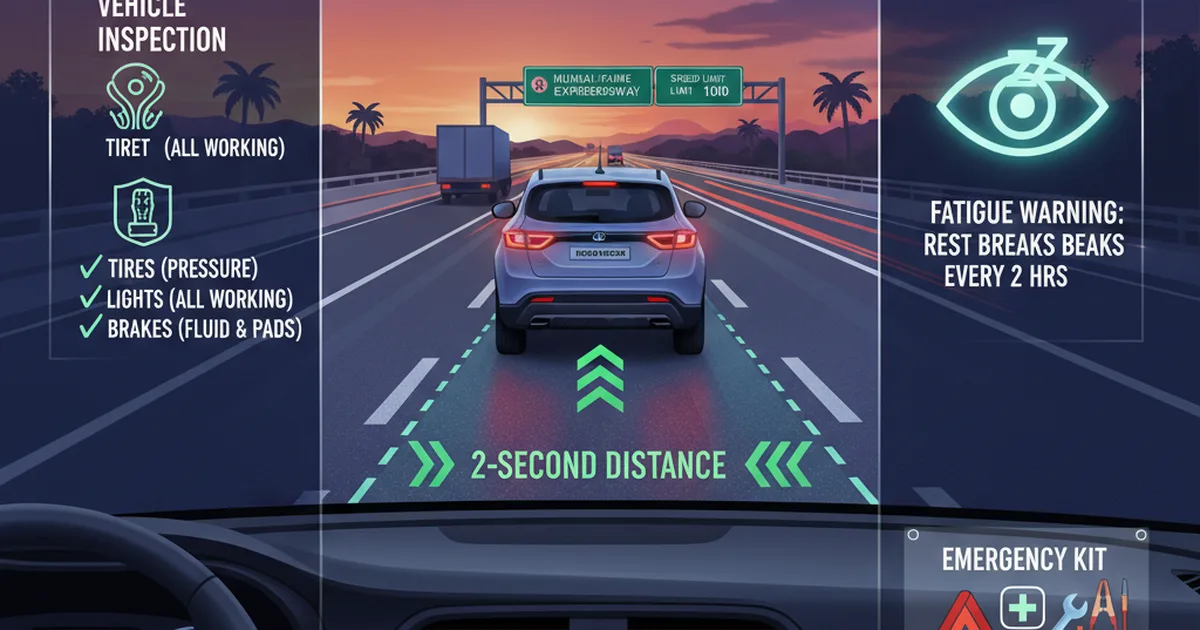

Every day, India’s highways witness approximately 1,374 road traffic accidents, claiming about 400 lives — a sobering statistic from the Ministry of Road Transport and Highways. Long-distance driving on expressways and national highways carries elevated risks due to high speeds, fatigue, and unpredictable traffic. This comprehensive guide provides evidence-based safety tips, pre-drive vehicle checks, fatigue management strategies, and emergency protocols to keep you safe on India’s highways in 2026.
The Deadly Truth: Road Safety Statistics on Indian Highways
India’s roads remain among the world’s deadliest — in 2023, over 172,000 lives were lost in road accidents, averaging 474 deaths daily or one death every three minutes. The Ministry of Road Transport and Highways (MoRTH) data reveals that highways and expressways account for a disproportionate share of fatalities relative to traffic volume. Nationally, excessive speed, driver fatigue, and lane discipline violations are the top three accident causes, collectively responsible for over 60% of crashes.
Expressways, while statistically safer than rural roads due to better infrastructure, still claim lives due to the high speeds involved (80–120 km/h). A single-vehicle rollover or head-on collision at expressway speeds often results in fatalities because occupants experience forces exceeding what the human body can withstand.
Pre-Trip Vehicle Inspection Checklist
Before embarking on any long highway journey, conduct a thorough vehicle inspection. Mechanical failures account for 10–15% of expressway accidents, and many are preventable with pre-drive checks.
Tire and Wheel Safety
Inspect all four tires and the spare for adequate tread depth (minimum 1.6 mm), proper inflation (check sidewall specs, not just visually), and damage (bulges, cracks, embedded objects). Underinflated tires heat up faster at highway speeds, increasing blowout risk. Overinflated tires reduce grip in wet conditions. Tire pressure should be checked every two weeks and always before long drives. Additionally, inspect wheel bolts for looseness using a cross wrench — loose wheels can detach at speed.
Brake System Inspection
Test brakes by pressing the pedal firmly in a safe parking area — the pedal should feel firm, not soft or spongy. Soft brakes indicate air in the brake lines or low brake fluid, both critical safety issues. Inspect brake pads visually through wheel spokes; pads should have at least 5 mm of material remaining. If brakes feel weak or make grinding noises, have them serviced before the journey.
Fluid Levels and Battery Health
Check engine oil (should be between MIN and MAX marks on the dipstick), coolant (to prevent overheating), brake fluid, and windshield washer fluid. Low coolant on a highway can cause sudden engine overheating, forcing an emergency stop in dangerous conditions. Test the battery by turning on headlights, wipers, and air conditioning simultaneously — if lights dim significantly, the battery may be weak and need replacement.
Lights, Wipers, and Air Conditioning
Ensure all exterior lights function: headlights (low and high beam), tail lights, brake lights, turn indicators, and hazard lights. Defective lights are a leading cause of night-drive accidents. Test wipers and ensure they leave no streaks on the windshield — worn wipers reduce visibility in sudden rain or mist. Air conditioning helps prevent driver fatigue during long drives; test it to ensure cold air flow.
| Component | Check | Action if Fail |
|---|---|---|
| Tire Tread | Minimum 1.6 mm depth | Replace tires immediately |
| Tire Pressure | Match sidewall specs (usually 32–36 PSI cars) | Inflate or deflate to spec |
| Brake Pedal Feel | Firm, no sponginess | Get brakes serviced before driving |
| Engine Oil Level | Between MIN and MAX on dipstick | Top up with correct oil grade |
| Coolant Level | Between MIN and MAX when engine is cool | Top up with distilled water + coolant |
| Headlights (low/high) | Both beams functional | Replace bulb or check fuse |
| Tail & Brake Lights | All functional when lights on and brakes pressed | Replace bulb or check circuit |
| Wipers | Clear streaks, no skipping | Replace wiper blades |
Combat Fatigue: The Silent Killer on Highways
Driver fatigue is responsible for an estimated 15–20% of highway accidents in India, yet remains underreported. Fatigue impairs judgment similar to alcohol intoxication — at 18+ hours without sleep, your reaction time matches that of a 0.08% BAC (legally drunk). The symptoms develop gradually, making it easy to ignore until it’s too late.
Early Fatigue Signs to Watch
Micro-sleeps (brief involuntary sleep episodes lasting 1–2 seconds) are the most dangerous sign. You lose control of the vehicle without awareness. Other warning signs include heavy eyelids, difficulty focusing, frequent yawning, drifting between lanes, and missing road signs. If you experience any of these, stop immediately and rest.
Fatigue Prevention Strategies
1) Get adequate pre-drive sleep. Aim for 7–8 hours the night before your journey. Studies show that starting a long drive on insufficient sleep significantly increases accident risk. 2) Avoid driving between 2–4 PM and midnight–6 AM, when the body’s circadian rhythm naturally dips toward sleep. 3) Take breaks every 2 hours or 160 km. Stop at rest areas or dhabas, exit the vehicle, walk around, and do light stretching. 4) Don’t rely on caffeine alone; it masks fatigue temporarily. Drink one strong coffee at the start of a break, but understand that coffee wears off — the underlying tiredness remains. 5) Rotate drivers. If traveling with others, switch drivers every 2 hours to distribute fatigue load.
When to Stop and Sleep
If you feel dangerously tired, stop at a safe location (rest area, hotel, trusted rest stop) and sleep for 15–20 minutes (power nap) or longer if you can. A brief nap is more effective than pushing through fatigue. Never attempt to reach your destination if drowsy — the 30 minutes you might save isn’t worth the fatality risk.
Lane Discipline and Defensive Driving
India’s highways are plagued by poor lane discipline — drivers frequently swerve without signaling, tailgate, and brake suddenly. This unpredictability is a major accident cause. Proper lane discipline and defensive driving techniques significantly reduce risk.
Lane Discipline Rules
On a 3-lane or 4-lane expressway, the leftmost lane is for slow-moving traffic (trucks, buses, cars under 80 km/h). The middle lanes are for normal traffic, and the rightmost lane is for overtaking only. Maintain your lane and signal 3 seconds before changing lanes. Look over your shoulder and use side mirrors to ensure no vehicle is in your blind spot. Never cut lanes abruptly — this is the #1 trigger for accidents and road rage incidents.
Speed Management
Expressway speed limits are typically 80 km/h for vehicles, 100 km/h for cars, and 120 km/h on certain stretches (Delhi–Mumbai Expressway allows 120 km/h in stretches). However, safe speed depends on conditions. In heavy traffic, rain, fog, or darkness, reduce speed below the limit. Collision forces increase with the square of velocity — a crash at 120 km/h is 4 times more energetic than at 60 km/h. Maintaining a speed 10–15 km/h below the limit dramatically improves safety margins.
Following Distance and Tailgating Prevention
Maintain a minimum following distance of 2 seconds from the vehicle ahead. At 100 km/h, this translates to roughly 55 meters. Use the “2-second rule”: pick a stationary landmark, watch when the car ahead passes it, and count to 2. If you reach the landmark before finishing your count, you’re too close. Never tailgate — it reduces reaction time to unexpected stops and triggers road rage in other drivers.
Weather-Specific Safety Protocols
Monsoon and Rain Safety
Heavy rain reduces visibility and grip. Reduce speed by 30–40%, increase following distance to 3 seconds, and avoid using cruise control (manual control gives better braking response). Turn on headlights to improve visibility to oncoming traffic. Avoid hydroplaning by steering away from standing water on the road. If your vehicle starts to skid, remain calm, do not brake hard, and steer in the direction you want the front of the car to go.
Fog and Mist Safety
Fog significantly reduces visibility and causes multiple-vehicle pile-ups. Use low-beam headlights (high beams reflect off fog particles, worsening visibility). Reduce speed to 30–50 km/h regardless of expressway limits, and use fog lights if equipped. Increase following distance to 4+ seconds. Listen carefully for vehicle horns approaching from behind, as rear-approaching vehicles in fog may not see you.
Night Driving Hazards
Night driving on Indian highways poses unique challenges: unlit sections, animals (cattle, dogs) suddenly crossing, oncoming vehicles with improperly aimed headlights causing glare, and reduced visibility. If possible, avoid night driving entirely — 25–30% of accidents occur at night despite only 20% of traffic being nocturnal. If you must drive at night, reduce speed by 20–30%, keep headlights on high beam except when meeting oncoming traffic, and take frequent breaks (every 90 minutes) to combat fatigue.
Emergency Preparedness
Essential Emergency Kit
Carry a well-stocked emergency kit on every long drive: basic tools (jack, wrench set, screwdrivers), spare tire (and check it’s properly inflated before the journey), jumper cables, warning triangles or flares, a flashlight with extra batteries, a basic first aid kit (bandages, antiseptic, pain relievers), and a fire extinguisher. Additionally, carry spare engine oil, coolant, and windshield washer fluid for topping up.
Breakdown Protocol
If your vehicle breaks down on an expressway, turn on hazard lights and place warning triangles 50 meters behind the vehicle. Exit the vehicle on the side away from traffic and move to a safe distance from the road. Call roadside assistance or the highway patrol (in India, contact local police or the highway authority). Do not attempt repairs on the expressway itself if traffic is heavy — it’s unsafe.
Accident Response
In case of an accident: (1) Turn on hazard lights and move the vehicle out of traffic if safe to do so. (2) Call the police (100) and medical emergency (102) if anyone is injured. (3) Take photos of the scene, damage, license plates of other vehicles, and contact information from witnesses. (4) File a formal police report and insurance claim form at the nearest police station. (5) Seek medical attention even for seemingly minor injuries — internal injuries may develop later.
Technology and Safety Aids
Modern cars come equipped with safety features that reduce accident severity and, in some cases, prevent accidents altogether. ABS (Anti-Lock Braking System) prevents wheel lockup during hard braking, allowing the driver to maintain steering control. Electronic Stability Control (ESC) detects loss of traction and automatically applies brakes to individual wheels to prevent skidding. Airbags cushion occupants in frontal and side impacts, reducing injuries by 40–50%. Dashcams record accident scenes and driver behavior, providing evidence for insurance claims. If your vehicle has these features, understand how they work and trust them during emergency maneuvers.
FAQs: Highway Safety for Long Drives
How Often Should I Stop During a Long Highway Drive?
Stop every 2 hours or 160 km for a 15–20 minute break. This allows you to stretch muscles, refresh mentally, and reassess fatigue levels. If you’re alone, stick to 2 hours; with multiple drivers, you can extend to 2.5 hours if all feel alert. Never drive more than 4 hours consecutively without a break.
Is It Safe to Drive on Indian Highways at Night?
Night driving on Indian highways is significantly riskier than daytime driving due to poor visibility, unlit stretches, stray animals, and oncoming glare. If possible, avoid it. If necessary, reduce speed 20–30% below daytime speeds, keep headlights on high beam (except when meeting traffic), and take breaks every 90 minutes. Never drive at night if fatigued.
What’s the Safest Speed for Highway Driving in India?
Speed limits on expressways are typically 80–100 km/h for cars. However, safe speed depends on conditions: in clear weather on empty roads, 100 km/h is safe; in heavy traffic, rain, or fog, reduce to 60–70 km/h. A speed 10–15 km/h below the limit provides better reaction time and reduces collision severity. Never exceed 120 km/h, the maximum on any Indian expressway.
How Can I Prevent Drowsy Driving on Long Journeys?
Get 7–8 hours of sleep before the drive, avoid peak fatigue times (2–4 PM, midnight–6 AM), take breaks every 2 hours, and rotate drivers if possible. Don’t rely on caffeine alone — it masks fatigue temporarily. If you feel drowsy, stop and take a 20-minute power nap or switch drivers. Never push through fatigue.
What Should I Do if My Vehicle Breaks Down on an Expressway?
Turn on hazard lights, place warning triangles 50 meters behind the vehicle, and exit on the side away from traffic. Do not attempt repairs on the expressway if traffic is heavy. Call roadside assistance or highway patrol. Wait in a safe location away from the vehicle.
Are ABS and Airbags Enough to Keep Me Safe?
No. Safety technology like ABS, airbags, and stability control reduce injury severity and prevent some accidents, but they don’t replace careful driving. They’re a safety net, not a substitute for speed management, lane discipline, and avoiding fatigue. Overconfidence in technology leads to risky driving behavior.
Should I Wear a Seatbelt on the Highway?
Absolutely. Seatbelts reduce fatal injury risk by 40–50% and are legally mandatory in India. Both driver and all passengers must wear seatbelts at all times, regardless of highway speed or distance. In a crash, an unbelted occupant can be thrown from the vehicle or into the dashboard; a seatbelt keeps you in place and distributes crash forces across stronger body areas.
What’s the Best Way to Handle Heavy Traffic and Road Rage?
Stay calm, maintain lane discipline, avoid sudden lane changes, and don’t engage with aggressive drivers. If someone tailgates you, slow down gradually (not hard braking) to encourage them to pass. Never make obscene gestures or respond to honking aggressively — road rage incidents can escalate to violence. Your safety is more important than “winning” a traffic dispute.
Conclusion: Drive Deliberately, Not Desperately
Long-distance highway driving in India carries real risks, but most accidents are preventable with proper preparation, defensive driving, fatigue management, and lane discipline. A pre-drive vehicle inspection takes 20 minutes and prevents mechanical failures. Adequate rest before driving, strategic breaks every 2 hours, and avoiding peak fatigue times (2–4 PM, midnight–6 AM) keep your mind sharp. Maintaining lane discipline, appropriate speed for conditions, and a 2-second following distance dramatically reduce collision likelihood. Technology (ABS, airbags, stability control) provides a safety net but doesn’t replace careful driving.
Before your next highway journey, run through this checklist, plan your route and stops, get adequate sleep, and commit to defensive driving. The extra hour a safety-conscious approach might take is a small price for arriving safely. Your life and the lives of others on the highway depend on it.
Related Posts: India’s major highway tunnels guide | NHAI national highway expansion 2026 | FASTag guide 2026 | Delhi–Mumbai Expressway road trip guide | expressway toll calculator India
Frequently Asked Questions
What causes the most highway accidents in India?
Speeding is responsible for 74.4% of all road accidents in India per MoRTH data. Other major causes include drunk driving, distracted driving (mobile phones), fatigue, and poor road conditions.
What is the emergency helpline number on NHAI roads?
NHAI operates a 24×7 helpline at 1033 for all national highway emergencies including breakdowns and accidents. You can also call 112 for the unified emergency response.
What speed limit applies on Indian expressways?
The speed limit for cars on access-controlled expressways is 120 km/h. For trucks and buses it is 80 km/h. Two-wheelers and three-wheelers are not permitted on expressways.
Is it safe to drive on Indian highways at night?
Night driving is riskier on two-lane NHs due to unlit vehicles and livestock. Access-controlled expressways are safer at night as they have no cross-traffic or pedestrians.
What documents are needed for a highway drive?
Driving licence, RC, valid insurance certificate, PUC certificate, and FASTag are mandatory. Digital copies via DigiLocker are legally accepted.
What is the Good Samaritan law in India?
The Motor Vehicles Amendment Act 2019 protects bystanders who help accident victims on highways. You cannot be detained by police or held liable for the victim’s condition.
How often should I stop on a long highway drive?
Take a break of at least 15-20 minutes every 2 hours of continuous driving. Most major expressways have NHAI wayside amenities every 50-80 km.