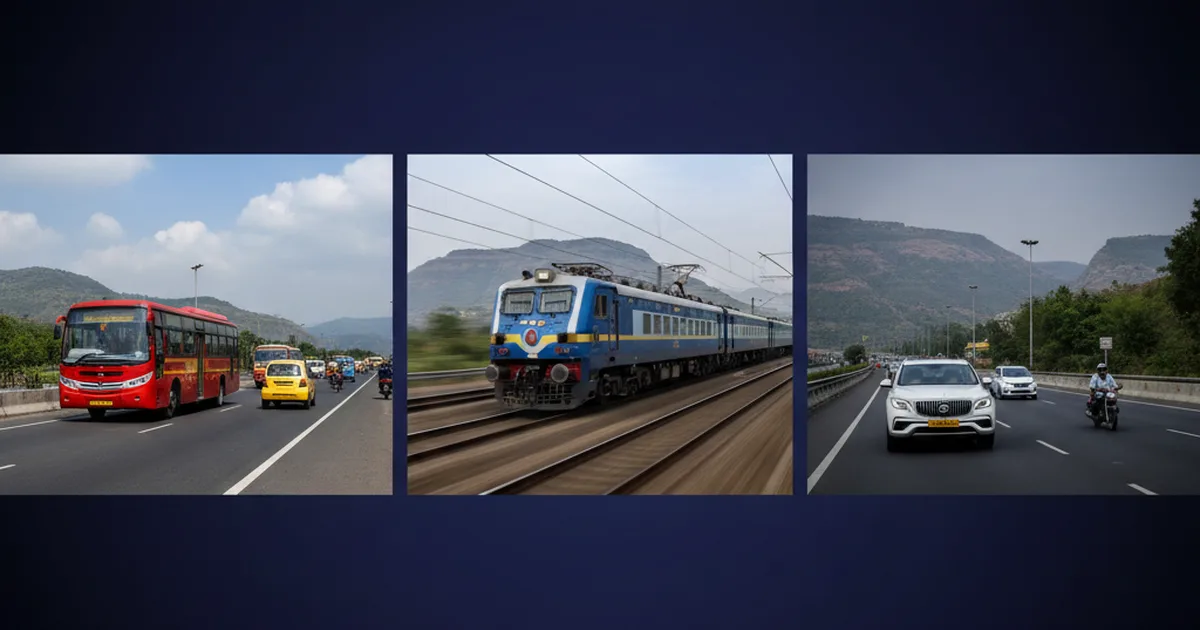

Traveling between Mumbai and Pune is one of India’s most common commutes, with over 500,000 people using this route monthly across all transport modes. Whether you’re considering a bus, train, or personal car, the choice depends on your budget, comfort level, time constraints, and safety priorities. This guide breaks down each option with real data, cost comparisons, safety statistics, and expert recommendations to help you decide which is best for your next trip in 2026.
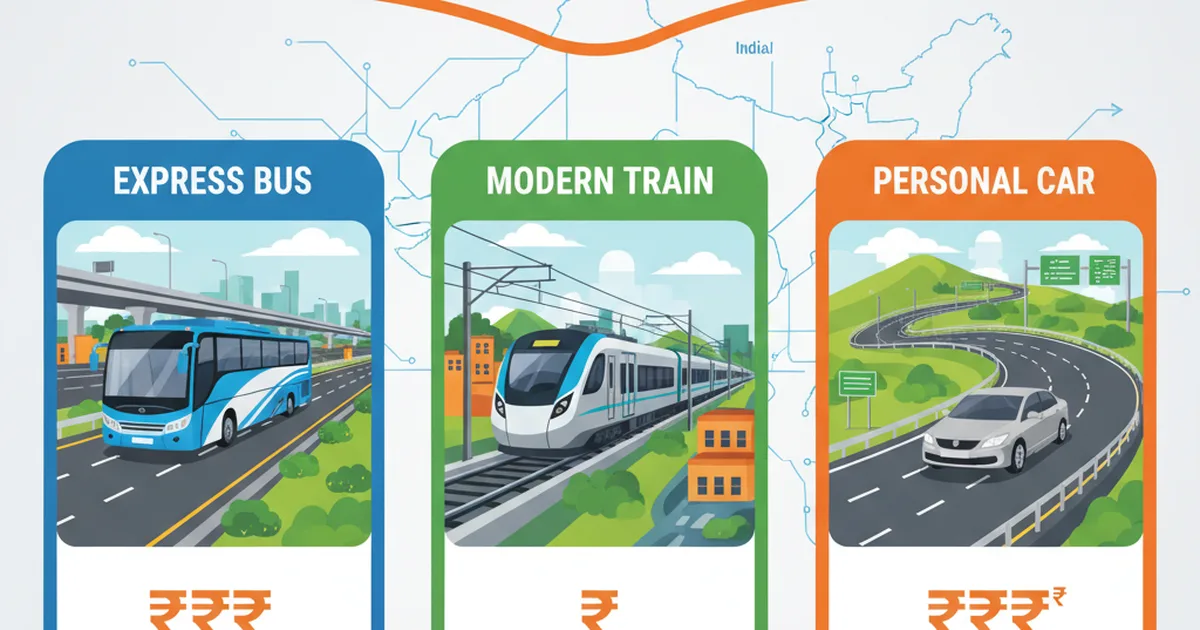
Distance & Route Overview
The distance between Mumbai and Pune is approximately 160 kilometers (100 miles). The primary route follows the Mumbai-Pune Expressway (also called the Pune-Mumbai Expressway), a well-maintained National Highway Authority of India (NHAI) toll expressway completed in 1997. This expressway spans 94.5 kilometers and is known for its efficient four-lane design, though parts can experience congestion during peak hours. Beyond the expressway, travelers use state highways and urban roads to reach city centers. Travel time ranges from 2.5 hours by express bus or train to 3–4 hours by personal car, depending on traffic and the specific route chosen.
Table of Contents
- Distance & Route Overview
- Bus Travel: Budget & Convenience
- Train Travel: Speed & Comfort
- Car Travel: Flexibility & Control
- Cost Comparison Table
- Safety & Accident Statistics
- Safety Comparison Table
- Which Mode is Best for You?
- Frequently Asked Questions
Bus Travel: Budget & Convenience
Bus services on the Mumbai-Pune route are operated by state-run Maharashtra State Road Transport Corporation (MSRTC) and numerous private operators like Shivam Travels, Sai Travels, and Neeta Travels. Buses depart every 10–15 minutes during the day, making this the most frequent option. According to 2026 data, typical fares range from ₹200–₹400 for standard coaches and ₹400–₹700 for air-conditioned (AC) sleeper buses. The journey takes 2.5–3 hours depending on traffic. A significant advantage is the central location of bus stands in both cities, eliminating the need for additional transportation to reach your final destination. Buses are cost-effective for solo travelers and families, particularly when booking in advance.
However, bus travel comes with trade-offs. The experience depends heavily on the operator’s maintenance standards and driving practices. As mentioned in our highway safety tips guide, bus safety on expressways is significantly better than private car travel—a 2023 MoRTH report showed buses have a crash fatality rate 70% lower than personal vehicles per 100,000 passengers. Comfort varies widely; AC buses with reclining seats offer decent comfort, while non-AC coaches are basic but functional. Luggage is handled safely, and the buses have basic amenities, though longer stops are infrequent on express routes.
Train Travel: Speed & Comfort
Indian Railways operates multiple train services on the Mumbai-Pune route, including express trains like the Deccan Express (Pune–Mumbai), the intercity trains, and local rapid services. The journey by express train typically takes 2 hours 45 minutes to 3 hours, making trains comparable to buses in travel time but with superior comfort. Fares range from ₹150–₹200 for unreserved seats to ₹400–₹800 for AC seating depending on the train class. Unlike buses, trains offer spacious seating, on-board catering (on some services), and cleaner facilities. For business travelers and families with children, trains are a comfortable option. Booking can be done online via IRCTC platforms, and tickets are secure with seat assignments.
The train advantage extends to safety and reliability. Rail travel is inherently safer than road transport, with minimal accident risk compared to buses and cars on highways. The downside is the fixed schedule—trains run at specific times, which may not always align with your preferred departure time. Additionally, railway stations are located on the outskirts of both cities, requiring additional local transportation (auto-rickshaw, taxi, metro) to reach your destination, adding 30–45 minutes to overall journey time and extra cost. During peak seasons, train seats can be fully booked, requiring advance planning.
Car Travel: Flexibility & Control
Driving a personal car on the Mumbai-Pune route offers maximum flexibility—you depart when you choose, take breaks as needed, and can adjust routes based on real-time traffic. The journey via the Mumbai-Pune Expressway typically takes 2.5–3.5 hours depending on traffic conditions and your speed. Tolls on the expressway are approximately ₹315–₹365 for cars with FASTag (electronic toll collection), which is mandatory from July 2021 onward. As detailed in our FASTag recharge guide, fuel costs add another ₹300–₹500 depending on vehicle efficiency. For a 4-seater car, the per-person cost can be competitive with trains when split among passengers, but solo drivers will find it more expensive.
The critical drawback of car travel is safety. According to the Ministry of Road Transport and Highways (MoRTH) 2023 Annual Report, personal vehicle occupants face a fatality risk 70 times higher per 100,000,000 passenger miles compared to buses. Factors contributing to this include driver fatigue, speeding, poor road conditions in certain sections, and encounters with commercial trucks. The expressway itself is well-maintained but experiences incidents involving rash driving, especially between 11 PM and 5 AM. Drivers must adhere to speed limits (100 km/h on expressways), avoid driving after dark without proper rest, and maintain vehicle health. A personal car is ideal for travelers seeking flexibility and carrying significant baggage, but only if the driver is well-rested and follows safety protocols.
| Factor | Bus | Train | Car |
|---|---|---|---|
| Cost per Person | ₹200–₹400 (AC: ₹400–₹700) | ₹150–₹800 (varies by class) | ₹800–₹1,200 (per person if solo) |
| Travel Time | 2.5–3 hours | 2 h 45 min – 3 hours | 2.5–3.5 hours |
| Frequency | Every 10–15 minutes | Multiple times daily | On-demand (you drive) |
| Comfort Level | Basic to Moderate | Moderate to High | High (personal preference) |
| Safety Risk | Very Low | Very Low | High (vs other modes) |
| Last-Mile Transport | Minimal (central locations) | Required (₹100–₹300 additional) | Not needed |
Safety & Accident Statistics
The Mumbai-Pune Expressway experiences approximately 150–200 accidents annually, with most involving personal vehicles, trucks, and two-wheelers rather than buses. Data from the NHAI and MoRTH show that buses involved in accidents have significantly lower fatality rates compared to cars due to their size, structural design, and the fact that buses are driven by experienced, regulated drivers. A 2023 study published by the Indian Council for Research on International Economic Relations (ICRIER) found that intercity bus travel has a fatality rate of 0.14 deaths per 100 million passenger kilometers, compared to 4.6 deaths per 100 million passenger kilometers for personal car travel in India.
Train accidents on the Mumbai-Pune corridor are rare, with safety mechanisms including automatic braking systems, rail inspections, and centralized traffic control. The last significant incident on this route was over a decade ago. When traveling by bus or car, time of travel matters: the expressway experiences peak accidents between 11 PM and 6 AM when driver fatigue is highest. For car users, adopting practices mentioned in our train vs road comparison can help assess risk per mode. Using FASTag not only streamlines toll payment but also creates records of your travel time, which enforcement agencies use to detect speeding patterns.
| Mode | Fatality Rate* | Key Safety Factors | Best Practices |
|---|---|---|---|
| Bus | 0.14 per 100M passenger km | Professional drivers, strict regulations, larger vehicles | Choose reputable operators, travel during day |
| Train | <0.05 per 100M passenger km | Automated systems, inspected tracks, no traffic | Board safely, keep belongings secure |
| Car | 4.6 per 100M passenger km | Driver skill, vehicle condition, traffic laws | Rest before driving, no speeding, avoid night driving |
| Note | *Data based on 2023 MoRTH and ICRIER studies; rates are approximate and vary by condition | ||
Which Mode is Best for You?
Choose Bus If: You’re budget-conscious, traveling solo or with friends, and prefer not to drive. Buses offer the lowest fares, high frequency, and excellent safety records. AC buses combine affordability with reasonable comfort. Book with operators like MSRTC or Shivam Travels for reliability.
Choose Train If: You value comfort, want to avoid driving fatigue, and don’t mind a slightly longer overall journey (including station transfers). Trains are ideal for business travelers, families with small children, and anyone seeking a spacious, safe travel experience.
Choose Car If: You need maximum flexibility, are traveling with 3–4 people (making per-person costs competitive), have significant luggage, or prefer not to follow fixed schedules. Only drive if you’re well-rested, familiar with the route, and committed to following speed limits and traffic regulations. Avoid solo drives, especially at night.
You May Also Like
You May Also Like: Best Weekend Road Trips from Delhi, Mumbai & Bengal, How to Book IRCTC Tickets Online, and FASTag Guide 2026.
Frequently Asked Questions
What is the cheapest way to travel from Mumbai to Pune?
Buses are the cheapest option, with fares starting at ₹200 for non-AC buses and ₹400–₹700 for AC sleeper buses. For two or more people, splitting a car rental may be competitive, but personal car tolls and fuel add up quickly.
How long does it take to travel from Mumbai to Pune?
Travel time is similar across all modes: 2.5–3 hours by bus or car, and 2 hours 45 minutes to 3 hours by train. Add 30–45 minutes for trains due to station location and local transport.
Is bus or train travel safer from Mumbai to Pune?
Both buses and trains are significantly safer than personal car travel. Buses have a fatality rate 70 times lower than personal vehicles, and trains are the safest mode. Avoid driving alone or at night.
Can I book a ticket online for Mumbai-Pune buses?
Yes, most operators offer online booking through platforms like redBus, Goibibo, and their own websites. Train tickets are booked on IRCTC.co.in. Booking online saves time and often offers discounts.
What is the toll cost for cars on the Mumbai-Pune Expressway?
With FASTag, the toll is approximately ₹315–₹365 depending on your vehicle class. Without FASTag, you’ll pay about 15% extra at manual toll plazas. Toll costs are mandatory.
Which transport mode allows the most luggage?
Personal cars allow the most flexibility for luggage. Buses have limited overhead compartments, while trains have berth luggage space. If you’re carrying large items, driving is preferable.
What time of day is safest to drive from Mumbai to Pune?
Daylight hours (6 AM–6 PM) are safest due to better visibility and lower accident rates. Avoid driving between 11 PM–6 AM when driver fatigue peaks, even on well-maintained expressways.